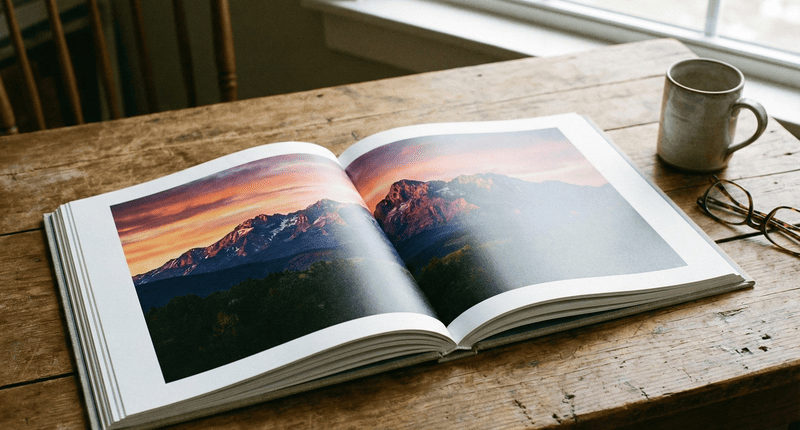
Are your stunning panoramic photos lost in the book’s gutter? A poor binding choice can ruin the viewing experience and devalue your art, frustrating both you and your readers.
For photography books, Smyth-sewn binding is the superior choice. It allows pages to lay completely flat, which is crucial for displaying full-bleed or panoramic images without distortion. This method ensures the integrity of your photographs and provides the durability needed for a premium, lasting art book.
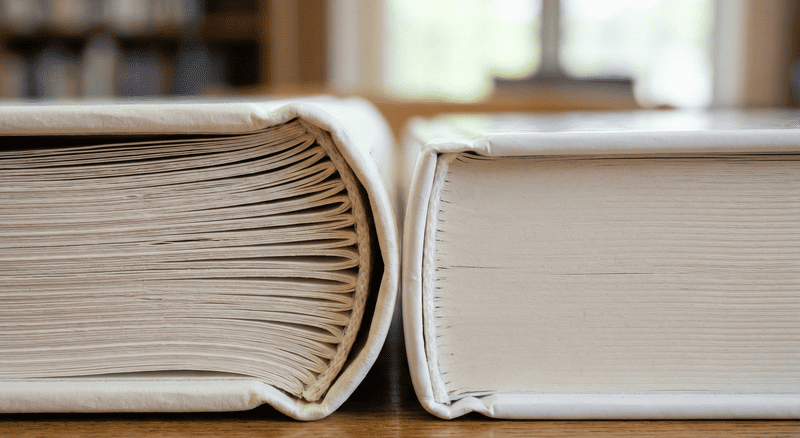
Choosing a binding method isn’t just a technical step; it’s a decision that defines the quality and feel of your final book. I grew up in my family’s printing business, and I’ve seen firsthand how the right binding can transform a project from good to exceptional. Both Smyth sewing and perfect binding have their uses, but for something as visual and valuable as a photography book, the choice becomes critical. Let’s break down why one is almost always the right answer for photographers and artists.
What is Smyth Sewn binding?
You’ve heard of high-quality binding but are not sure what makes it special. Choosing the wrong option can make your carefully crafted book feel cheap and fall apart over time.
Smyth-sewn binding is a traditional technique where groups of folded pages, called signatures, are stitched together with thread. These sewn signatures are then bound into the cover. This method creates a highly durable, flexible spine that allows the book to lay completely flat when opened.
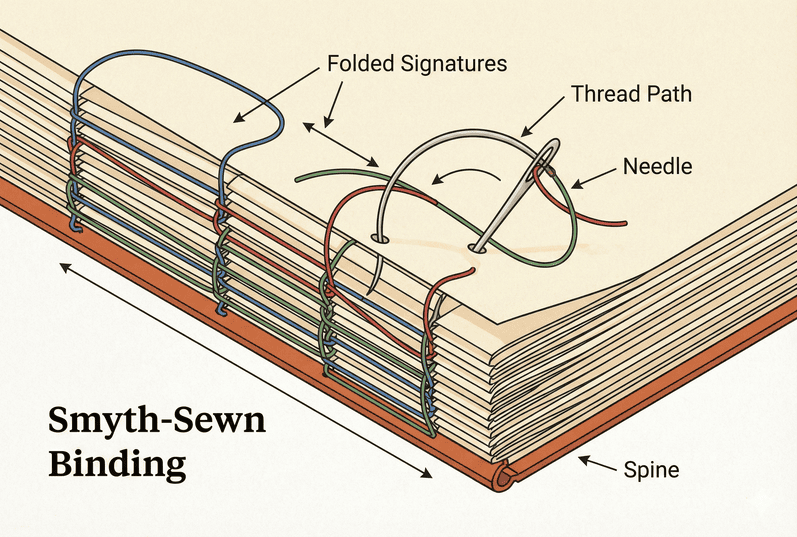
At our press, watching the Smyth sewing machine work is still one of my favorite things. It’s a mix of precision engineering and classic craftsmanship. The machine takes folded signatures, typically 16 or 32 pages each, and sews them together through the fold. This creates a strong, unified book block. Unlike other methods, the pages are physically connected by thread, not just held by glue. This process is more time-consuming and requires more skill, which is why it costs more. But the result is a book that feels incredible to hold and is built to last for generations. I remember my grandfather insisting on this for any art-related publication, telling me, "The binding is the skeleton. Without a strong skeleton, the body will fall apart." It’s a lesson that holds true today, especially for premium photo books.
| Feature | Description | Benefit for Photo Books |
|---|---|---|
| Construction | Signatures are sewn together with thread. | Superior strength and long-term durability. |
| Lay-flat | Pages open and lay completely flat. | Perfect for uninterrupted, two-page image spreads. |
| Durability | Thread reinforcement prevents pages from falling out. | Handles heavy, coated paper stocks with ease. |
| Perceived Value | Signifies craftsmanship and high quality. | Justifies a higher retail price for a premium product. |
What is Perfect Binding?
You need a cost-effective binding solution but worry about its quality. Will the pages fall out after a few reads, making your book look unprofessional and disappointing your customers?
Perfect binding is a widely used method where single pages are stacked together, the spine edge is ground down to create a rough surface, and a strong adhesive is applied to glue the pages directly to the cover. It creates a clean, flat spine and is very cost-effective.
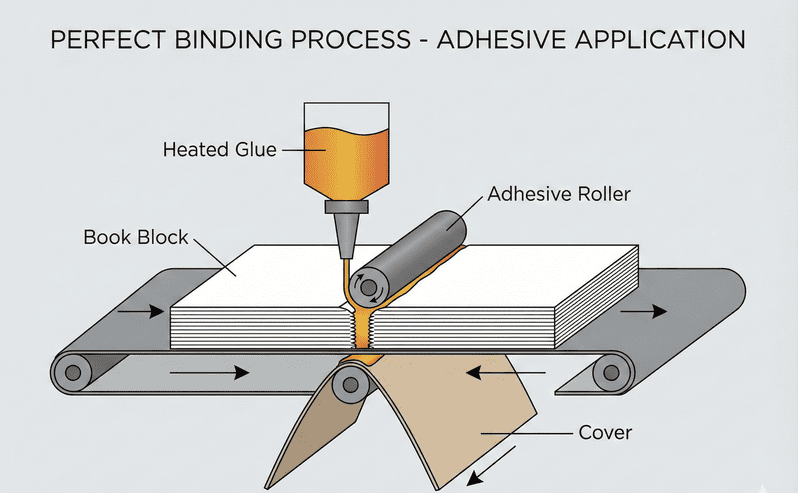
Perfect binding is the workhorse of the publishing world, and we use it for many projects like trade paperbacks and corporate manuals. The process is fast and efficient. A stack of collated pages is moved to a station where a blade grinds off about 1/8 inch of the spine edge. This "milling" creates a rough surface that helps the glue adhere better. Then, hot glue is applied, and the cover is wrapped around the book block. While modern glues, especially PUR (Polyurethane Reactive) adhesive, are incredibly strong and flexible, the binding’s entire integrity relies on that single line of adhesive. For a standard novel with lightweight paper, it works great. But when you start using the heavy, coated paper required for high-quality photo reproduction, you put a lot of stress on that glued edge. The book won’t lay flat, and forcing it open can crack the spine and, over time, cause pages to come loose.
| Feature | Description | Drawback for Photo Books |
|---|---|---|
| Construction | Single pages are glued together at the spine. | Less durable, especially with heavy paper stocks. |
| Lay-flat | Does not lay flat, creating a deep "gutter." | Images are lost or distorted in the center spine area. |
| Durability | Relies solely on adhesive strength, which can weaken. | Higher risk of pages detaching with frequent handling. |
| Cost | Inexpensive and allows for fast production times. | Can signal lower quality, affecting the book’s value. |
Is thread sewn better than perfect binding?
You are trying to decide between two popular binding methods for your book. Making the wrong choice could compromise your book’s longevity, visual appeal, and the reader’s overall experience with your work.
Yes, for publications that require maximum durability and a lay-flat design, like photography books, thread-sewn (Smyth-sewn) is significantly better. Its sewn construction is far stronger and allows images to be viewed seamlessly across a spread, preserving the artist’s intent.
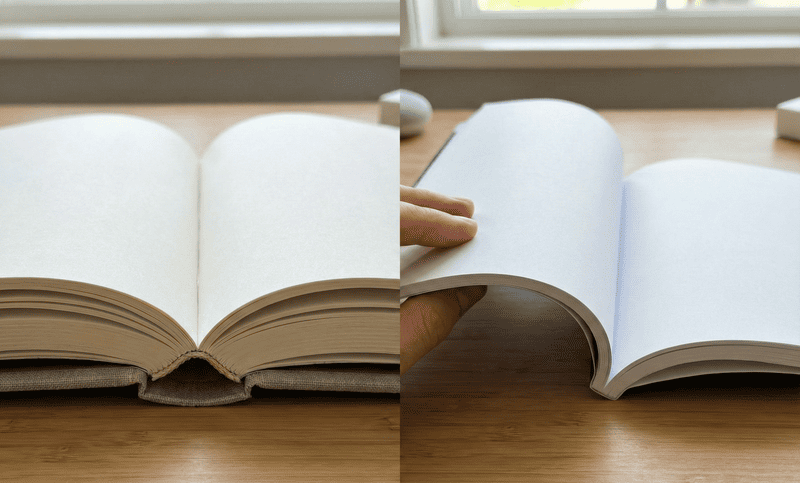
The answer really comes down to the purpose of the book. For a photography book, the two most important factors are visual presentation and longevity. In both areas, Smyth-sewn is the clear winner. The biggest issue with perfect binding for a photo book is the gutter—the inner margin where the pages are glued. Any part of an image that crosses the center of a two-page spread gets lost or distorted in this gutter. To see the full image, you have to press the book open, which puts stress on the spine and can eventually break it. Smyth-sewn binding completely solves this problem. Because the signatures are sewn, the book can open and lie perfectly flat. This allows you to design stunning two-page spreads that are viewed as a single, uninterrupted canvas. A Print Production Director I work with, Stephanie, told me, "For an art book, choosing perfect binding is like framing a masterpiece behind dirty glass. It obstructs the view and disrespects the art." It’s an investment in the user experience.
What does a good photography book need in terms of binding?
You have invested countless hours and resources into your photography and design. But choosing the wrong binding can make all that effort feel wasted, undermining the quality of the final product.
A good photography book requires a binding that provides two essential features: a true lay-flat opening and exceptional durability. This ensures that heavy paper is held securely and that images crossing the center are displayed perfectly without being lost or distorted in the spine.

When we help clients create a photography book, the conversation always turns to binding, and I emphasize four key needs that the binding must meet. First is lay-flat viewing. This is non-negotiable. Your images must be seen as you intended, and any binding that creates a gutter compromises that vision. Second is archival quality. Photo books are often keepsakes or collector’s items. The binding must be durable enough to last for decades without pages falling out or the spine cracking. Sewn threads provide this archival strength. Third, the binding must support heavy paper. Photography books almost always use thick, coated paper (150-200 gsm) to make the images pop. This paper is heavy, and a sewn spine distributes that weight evenly across the signatures, preventing failure. A glued spine concentrates all that stress on one weak point. Finally, it must have a premium feel. The physical experience of holding and opening the book is part of its appeal. A flexible, sturdy Smyth-sewn book feels like a high-quality object, reinforcing the value of the art inside.
Conclusion
For photography books, Smyth-sewn binding is the clear winner. Its lay-flat quality, superior durability, and premium feel make it the best choice to protect and enhance your artistic vision.