Skip to content
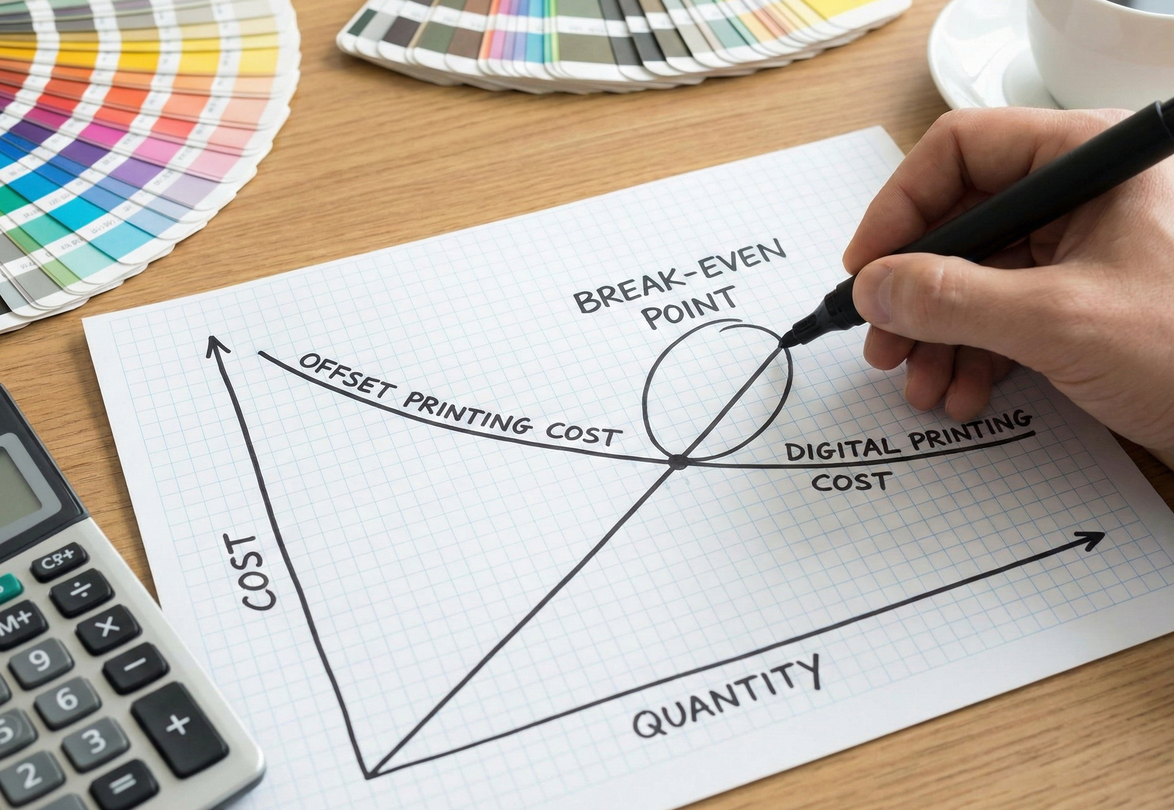
Your books are selling well. But when you calculate the margin, you suddenly realize that the cost per copy is not going down as expected no matter how many more copies you’ve printed. Print-on-demand (POD) eats your margins as orders grow. You must find the exact point to scale up to offset printing to protect your profits.
You should switch to offset printing at the 500-copy threshold. Beyond 500 units, offset printing drops your per-book cost significantly due to the economy of scale, while offering superior Pantone color accuracy and broader paper weight support.
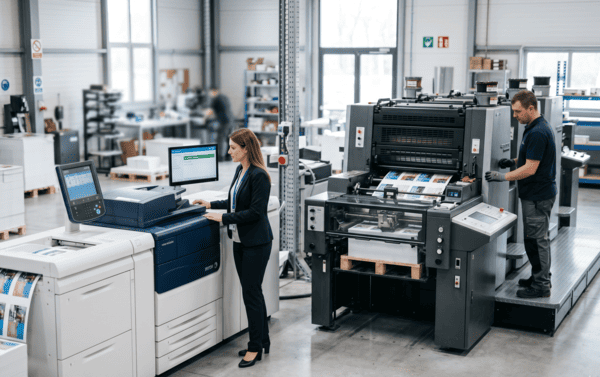
Let me show you exactly how to make this operational shift based on real factory data. I have watched publishers lose thousands of dollars simply by choosing the wrong press format.
How Does Cost Compare Between POD and Offset Printing?
High unit costs kill your project budget. Digital printing keeps your invoice high regardless of volume. You need a scalable method to lower your cost per book.
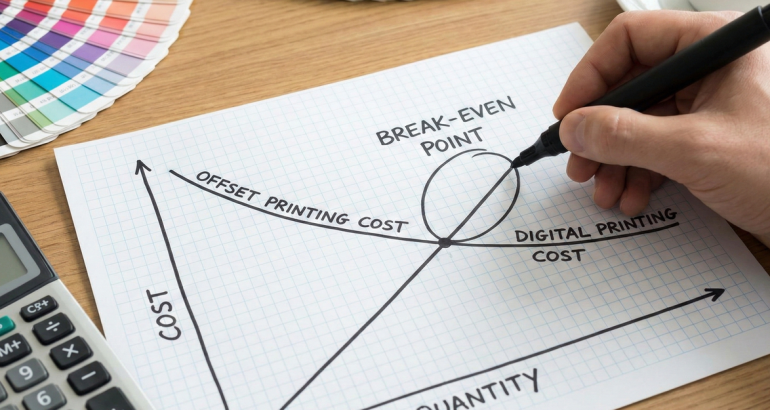
Offset unit costs drop dramatically as print runs increase, while POD costs remain static. Offset requires upfront Computer-to-Plate (CTP) setup fees, but spreads this cost across large volumes, making it the cheaper option past 500 copies.
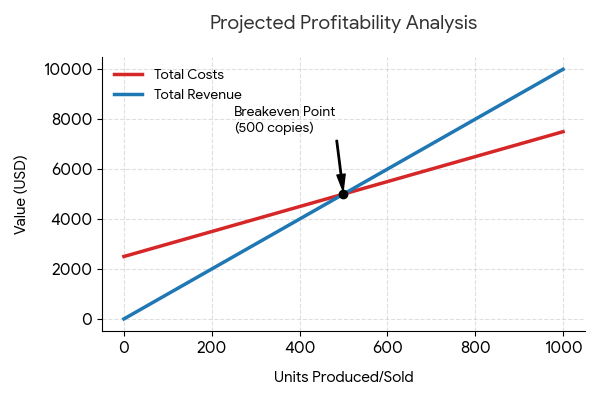
Offset printing requires physical metal plates. We use a CTP (Computer-to-Plate) system at Huaxin Printing. You pay a fixed setup fee for these plates before we print a single page. If you print 50 copies, that setup fee makes each book too expensive. But if you print 1,000 copies, that plate cost disappears into fractions of a cent per book. Digital printing works differently. It uses toner or inkjet heads. There is zero plate setup cost. However, the machine clicks cost exactly the same for book 1 and book 1,000. Your unit cost line is completely flat. When you plan a budget, you must look at your total print run. If you expect steady sales, offset printing builds your margin. I advise my clients to look at shipping too. A 1,000-copy offset run shipped via ocean freight under FOB terms yields a massive profit margin advantage over domestic POD fulfillment. You just have to manage the longer lead time.
Unit Cost Breakeven Analysis
| Metric | Print On Demand (Digital) | Offset Printing |
|---|---|---|
| Setup Fees (CTP) | $0 | $150 – $400 (Varies by page count) |
| Unit Cost Curve | Flat / Static | Decreases exponentially |
| Ideal Volume | 1 – 499 copies | 500+ copies |
| Cost per 1,000 copies | High (e.g., $4.50/book) | Low (e.g., $1.20/book) |
Does the Number of Designs Affect Your Printing Choice?
You manage multiple book titles. Separate offset setups for each title waste time and money. You need a fast way to test multiple designs without high risk.
POD is the best choice for projects with multiple unique designs and low individual print runs. Because digital printing skips CTP plates, you can print 10 copies of 50 different designs without paying any mechanical setup fees.
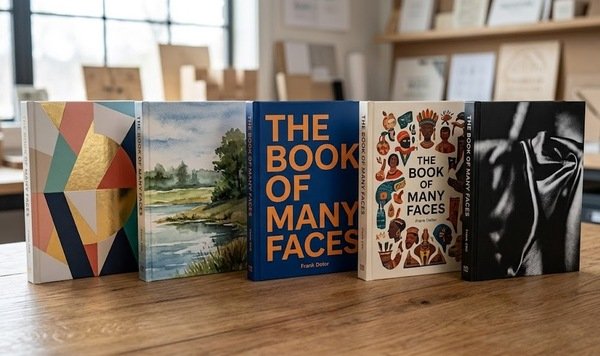
I see many publishers launch campaigns with ten different cover variants. If you run those ten covers on an offset press, I have to burn ten different sets of plates. I have to wash the press and recalibrate the ink zones ten times. That labor and material cost falls directly on your invoice. If you only need 50 copies of each variant, offset makes zero financial sense. Digital printing solves this design problem. The machine reads a digital PDF file and applies toner directly to the sheet. I can run variant A, variant B, and variant C back-to-back without stopping the machine. This is why POD dominates the self-publishing test market. But remember the threshold rule. Once a specific design proves successful and you need a restock of 1,000 copies, you must pull that single design out of the POD workflow. Move that winning design to offset. You use POD to test the market and offset to maximize your profit on the winners.
Strategy for Multiple Title Variations
| Scenario | Best Press Method | Reason |
|---|---|---|
| 50 Designs, 10 Copies Each | Print On Demand | Avoids 50x CTP plate setup fees. |
| 1 Design, 1,000 Copies | Offset Printing | Amortizes plate cost, maximizes profit. |
| 5 Designs, 1,000 Copies Each | Offset Printing | Volume justifies plate setups for each. |
| Proof Copies (Advance Readers) | Print On Demand | Fast turnaround, zero mechanical setup. |
Can POD Meet Your Strict Color Management Standards?
Washed-out colors destroy brand trust. Digital printers often fail to match your specific brand colors. You need exact color reproduction across every single page.
Offset printing provides vastly superior color accuracy, consistency, and exact Pantone matching. If your project requires precise CMYK control or spot colors, offset presses deliver reliable wet ink density that POD toner simply cannot replicate.
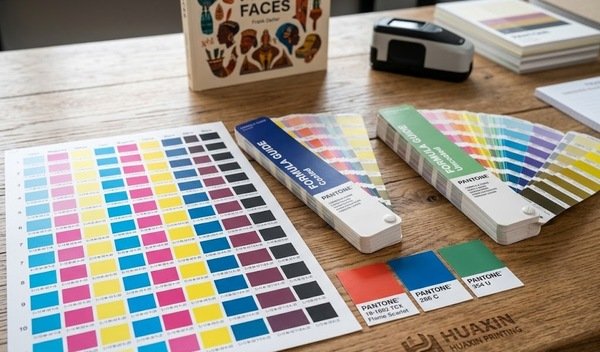
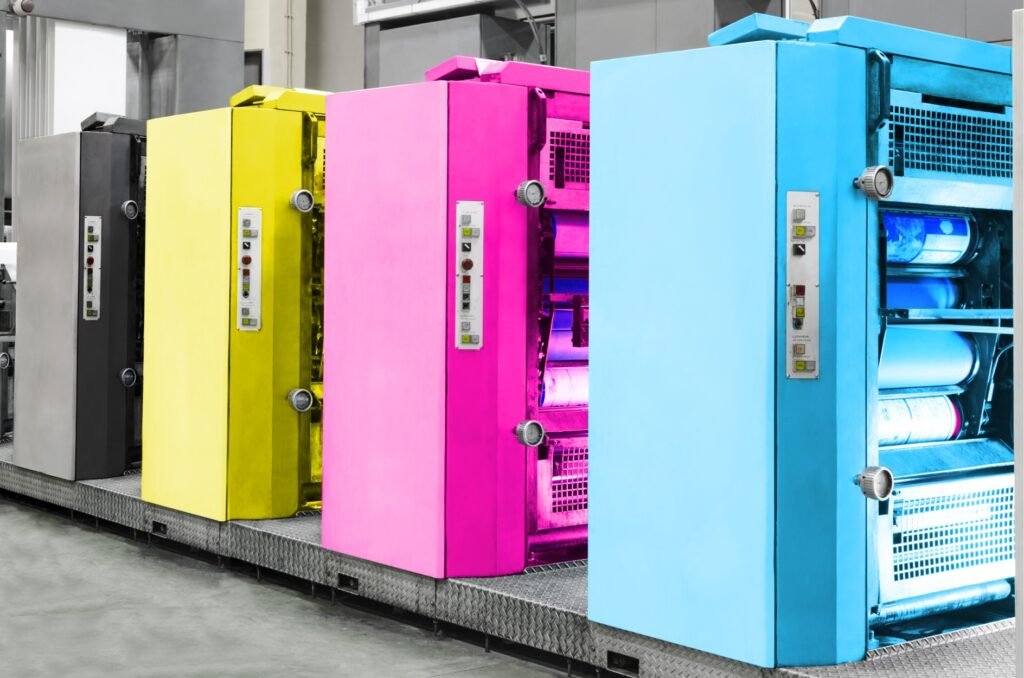
Let us talk about real color control. Corporate brands and high-end art book publishers demand exact color matches. Digital printing attempts to simulate colors using a standard CMYK toner blend. It gets close, but it fluctuates. I monitor digital presses daily. A print pulled at 8 AM might look slightly warmer than a print pulled at 4 PM due to humidity changes affecting the toner. Offset printing fixes this. We mix actual wet ink. If you specify Pantone 185 Red, we put Pantone 185 Red ink directly into the press roller. The exact pigment hits the paper. Furthermore, our offset presses use advanced spectrophotometers to monitor ink density in real-time. This guarantees the color remains completely locked in from sheet 1 to sheet 10,000. If you print coffee table photography books, cookbooks, or corporate catalogs, you cannot compromise on color. Offset printing gives you access to metallic inks, fluorescent spot colors, and true rich blacks that digital machines physically cannot produce.
Technical Color Capabilities
| Color Feature | Digital Printing (POD) | Offset Printing |
|---|---|---|
| Color Consistency | Moderate (subject to drift) | Very High (spectrophotometer controlled) |
| Pantone (PMS) Support | Simulated (often inaccurate) | True Spot Color Matching |
| Rich Black Density | Good | Excellent (Deep, wet ink coverage) |
| Specialty Inks | Very limited | Metallic, Fluorescent, UV supported |
How Does Press Choice Impact Your Paper Options?
Standard POD paper feels cheap. Digital machines reject very thin or very thick stocks. You need premium paper to make your book stand out.
Offset printing accepts a much wider range of paper weights and textures than POD. Digital presses jam or fail on paper below 70gsm or above 350gsm, forcing you to use offset for specialty Bibles or heavy board books.
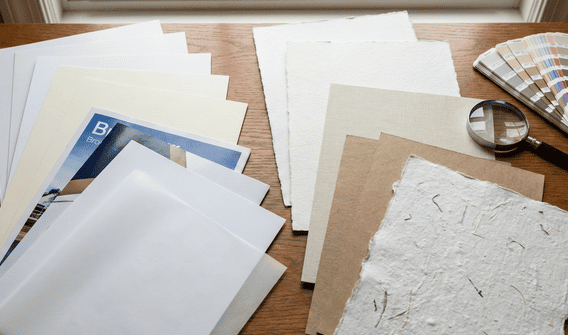
Paper dictates the physical feel of your product. Digital printers run paper through high-heat fusers. This heat curls or damages many specialty stocks. More importantly, digital feed rollers are very strict. If you try to feed 40gsm Bible paper into a digital press, it will tear. If you push a 400gsm C1S cover board through it, it will jam. This severely limits your material choices. Offset presses handle paper mechanically with grippers and cylinders. There is no heat fuser. At Huaxin Printing, I regularly run 60gsm woodfree paper for large catalogs on our offset equipment. I also run heavy 350gsm art card for premium packaging and slipcases. If you want textured cotton paper, uncoated offset paper with proper grain direction, or specialized FSC-certified recycled stocks, you must use offset. You also gain better binding options. A Smyth sewn binding requires proper paper folding. Offset sheets fold cleaner than digital sheets, resulting in a stronger, lay-flat book block that meets retail quality standards.
Paper Weight Constraints
| Paper Specification | Print On Demand | Offset Printing |
|---|---|---|
| Minimum Weight Limit | 70gsm (approximate) | 40gsm (Bible paper / Dictionary) |
| Maximum Weight Limit | 300gsm – 350gsm | 400gsm+ (Board books / Packaging) |
| Textured / Cotton Paper | Poor ink adhesion | Excellent coverage |
| Grain Direction Control | Limited (pre-cut sheets) | Absolute control (large parent sheets) |
Frequently Asked Questions
Q: What is the exact minimum order quantity (MOQ) for offset printing?
A: Most factories set the offset MOQ at 500 copies. At this volume, the unit cost becomes cheaper than POD despite the upfront CTP plate setup fees.
Q: Does offset printing take much longer than print-on-demand?
A: Yes. POD typically takes 3 to 7 days. Offset printing requires 15 to 20 days for production, plus shipping time, due to wet ink drying and mechanical press setups.
Q: Can I use Smyth sewn binding with digital POD printing?
A: It is rare and difficult. POD usually relies on perfect binding (EVA or PUR glue). True Smyth sewn binding is heavily optimized for folded signatures printed on offset presses.
Next Steps for Your Print Production
The math is clear. You use POD to test your book designs and fulfill low-volume orders. You switch to offset printing at 500 copies to slash your unit costs, lock in Pantone color accuracy, and access premium paper weights. Understanding this threshold separates profitable publishers from those who burn cash on printing. If your project has crossed the 500-copy mark and you need a high-quality offset manufacturing strategy, contact me at Huaxin Printing. I will help you structure your next print run.