Your stunning B&W photos look flat and lifeless in print. The wrong paper choice can ruin months of work. Let’s find the right paper to make your images pop.
For black and white photography books, coated papers like gloss or semi-gloss are best. They offer the highest black density (D-max)1 and a wide tonal range2. This ensures your blacks are deep, whites are bright, and details are sharp, creating a professional, high-contrast look.
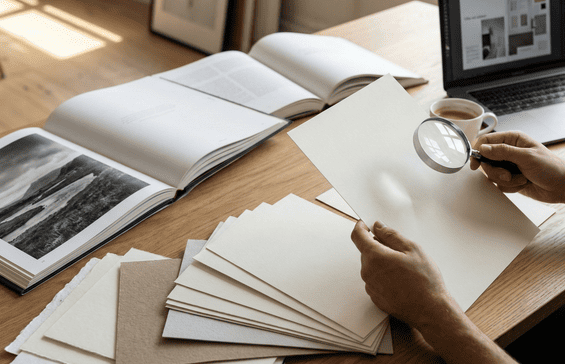
I remember my first major photography book project. A client brought in these incredible black and white portraits, but the initial proofs looked terrible. The paper was all wrong. It took some experimenting, but we finally found the perfect match. That experience taught me just how critical paper selection is. The right choice can elevate your art, while the wrong one can completely undermine it. Let’s break down exactly what you need to look for.
What makes the best black and white photo in terms of printing?
Your B&W prints lack the dramatic contrast you intended. This makes powerful images feel flat and dull. The secret to a stunning print is maximizing the tonal range.
The best printed black and white photos have a wide tonal range. This means deep, rich blacks (high D-max) and bright, clean whites. This contrast allows for a full spectrum of grays1 in between, revealing fine details and creating a sense of depth and dimension2.
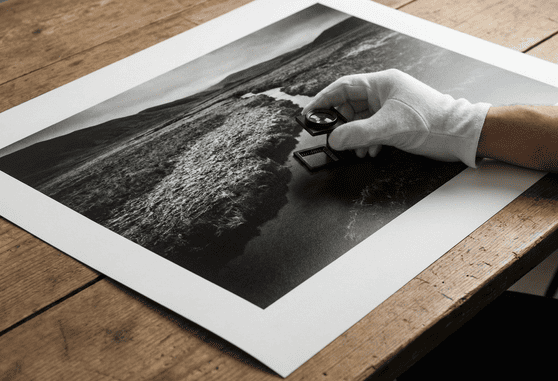
The key to a great black and white print is its ability to show the deepest possible black. We call this "D-max," or maximum black density. A high D-max is crucial. It creates the foundation for a wide tonal range, which is the full spectrum from the purest white to the richest black. This range is what gives a photo its punch and visual impact. Paper finish plays a direct role here. Glossy and semi-gloss papers are fantastic at achieving a high D-max. Their smooth, reflective surfaces hold the ink on top, preventing it from soaking in and looking dull. This results in incredibly deep blacks and sharp details.
How Paper Finish Affects Tonal Range
Matte papers, on the other hand, have a non-reflective surface that tends to absorb more ink. This leads to softer blacks and a lower overall contrast. While this can be a beautiful artistic choice for certain projects, it doesn’t deliver the same level of sharpness and depth you see in exhibition-quality prints. For a photo book where you want every detail to stand out, a coated paper with some sheen is almost always the better choice.
What paper do professional photographers print on?
You want your photo book to have that professional, gallery-quality feel. But using the wrong paper can make your work look amateurish. Let’s look at what the pros choose.
Professional photographers often choose fiber-based (FB) baryta papers for their most important work. These papers offer the highest D-max for incredible blacks, excellent sharpness, and superior archival quality. For commercial book runs, premium coated art papers with a gloss or semi-gloss finish are the standard.

When it comes to single, exhibition-quality prints, the gold standard is fiber-based (FB) paper. Specifically, many pros swear by baryta papers. These have a fiber base coated with barium sulphate1, which creates a smooth surface that enhances detail and tonal range. Most importantly, FB papers are known for their exceptional archival quality. This means they are built to last for generations without fading or yellowing. A common misconception I see is that heavy paper equals archival quality. That’s not entirely true. The real longevity comes from the paper’s material composition.
Comparing Professional Paper Types
Most everyday photo prints are made on Resin-Coated (RC) paper, which is less expensive and easier to handle. However, it doesn’t have the same stability or lifespan as a true fiber-based paper. For a high-end, limited-edition photography book, using a paper that mimics the feel and quality of baryta is key.
| Feature | Fiber-Based (FB) Baryta Paper | Resin-Coated (RC) Paper |
|---|---|---|
| Core Material | Natural paper fiber base | Paper base coated in plastic |
| Archival Quality | Excellent (100+ years) | Good (20-50 years) |
| Tonal Range | Superior, deep blacks | Very good, but less depth |
| Feel | Hefty, artistic, museum-quality | Lighter, more like a photo |
| Best For | Fine art prints, galleries | Commercial books, everyday prints |
What are the advantages & disadvantages of coated paper?
Coated paper seems like the obvious choice for photos, but what about the glare? You don’t want your beautiful images hidden by reflections. Let’s weigh the pros and cons.
The main advantage of coated paper is image quality. It provides sharp details, deep blacks, and vibrant contrast by keeping ink on the surface. The disadvantages can include glare (on glossy finishes) and susceptibility to fingerprints. A semi-gloss or luster finish offers a good compromise.
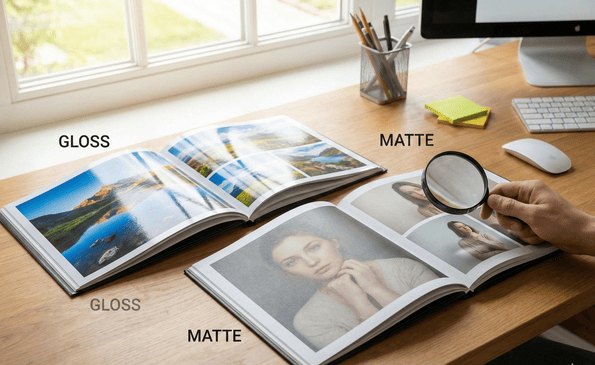
Coated paper isn’t just paper with a shiny layer on top. In modern printing, that coating is a sophisticated, engineered surface. It’s an ink-receptive layer designed to control how ink behaves when it hits the page. For detailed B&W photos, this is absolutely critical. The coating prevents the ink from bleeding or spreading out, which keeps fine lines sharp and tonal transitions clean. It holds the ink dots precisely where they are placed, giving you a much sharper final image compared to uncoated paper, where the ink soaks into the fibers and softens the details.
Pros and Cons of Coated Paper
This control over the ink is the biggest advantage. It directly leads to a higher D-max and a wider tonal range. But there are trade-offs to consider.
| Advantages | Disadvantages |
|---|---|
| Sharpness: Holds ink dots for crisp details. | Glare: Glossy finishes can have reflections. |
| Contrast: Achieves deep blacks and bright whites. | Fingerprints: Oils from hands can mark the surface. |
| Durability: More resistant to dirt and moisture. | Cracking: Can sometimes crack on folds if not scored properly. |
A great middle ground is a semi-gloss or luster paper. It gives you most of the benefits of a gloss finish but with significantly less glare, making it a popular choice for high-quality photo books.
Can I use uncoated paper for B&W photography printing?
You love the raw, textural feel of uncoated paper. But you worry it will make your sharp B&W photos look fuzzy and lifeless. Let’s see if it’s a viable option.
Yes, you can, but with caution. Uncoated paper absorbs more ink, which can soften details and reduce black density. However, for a specific artistic, tactile, or vintage look, it can be very effective. It requires careful file preparation and custom color profiles to achieve good results.

While I usually recommend coated paper for maximum impact, the answer isn’t a simple "no." You absolutely can use uncoated paper, but you need to go into it with the right expectations. Uncoated paper acts like a sponge. It soaks up ink, which means your blacks won’t be as deep, and fine details can become softer. The overall image will have less contrast and "pop" compared to one on coated stock. I once worked with a print production director, Stephanie, who was creating a book about ancient ruins. She specifically wanted a raw, timeless feel. The sharp, modern look of coated paper just didn’t fit her vision.
Making Uncoated Paper Work
We chose a high-quality, heavyweight uncoated paper. The key to our success was working together closely. My team created custom printing profiles1 specifically for her images and that exact paper. This process adjusts the amount of ink used to compensate for how much the paper absorbs. It ensures the shadows don’t become muddy and that we retain as much detail as possible. The final book was beautiful. It had a wonderful, tactile quality that invited you to touch the pages. The photos felt less like reproductions and more like historical artifacts. So, if you want an artistic, textural feel and are willing to work with your printer, uncoated paper can be a fantastic choice.
What’s the recommended paper weight for printing B&W photography?
You don’t want your beautiful photo book to feel flimsy and cheap. The wrong paper weight can completely undermine the perceived value of your work. Let’s talk about the right weight.
For the interior pages of a quality B&W photography book, I recommend a paper weight between 150-200 gsm (grams per square meter). For the cover, a much heavier stock of 300-350 gsm is ideal to provide durability and a substantial feel in the hands.
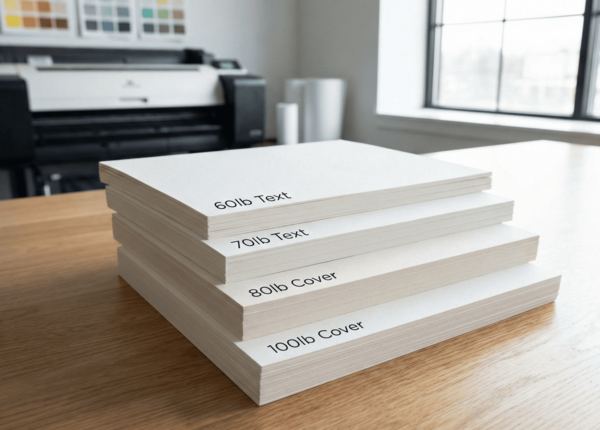
Paper weight is measured in gsm, which stands for "grams per square meter." It’s a direct measure of the paper’s density and thickness. A higher gsm number means heavier, thicker paper. For a photography book, the weight of the paper is all about the user experience. It affects how the pages feel when you turn them and prevents images on the other side of the page from showing through. A common issue with thin paper is "show-through," where you can faintly see the print from the reverse side, which is very distracting.
Recommended Paper Weights
A heavier paper feels more luxurious and durable. It gives the book a sense of importance and value. However, going too heavy on the interior pages can make the book stiff and difficult to open. You need to find the right balance. Here are my general recommendations:
| Book Part | Recommended Weight (gsm) | Why? |
|---|---|---|
| Interior Pages | 150 – 200 gsm | Feels substantial, prevents show-through, and pages turn nicely. |
| Softcover | 300 – 350 gsm | Provides durability and a premium, sturdy feel. |
| Hardcover Wrap | 130 – 150 gsm | Needs to be thin enough to wrap around the cover boards smoothly. |
Choosing a paper around 170 gsm for the interior is often a sweet spot. It feels great in the hand and ensures your beautiful B&W photos are the only thing the reader sees on the page.
Conclusion
Choosing the right paper is key. Coated paper offers the best detail, while specific weights provide a premium feel. Understand your options to make your B&W photography book truly shine.