

Finding a reliable book printer in China feels straightforward — until a shipment arrives with colors nothing like your approved sample. That single moment can wipe out weeks of planning, thousands of dollars, and your credibility with customers. The good news? The right questions, asked early, can expose this risk before you commit.
Choosing a reliable book printer in China is not primarily about finding the lowest price or the longest certification list. It is about identifying suppliers who can maintain consistency between your approved sample and a full bulk run — weeks or months later, on a different press, handled by a different operator. The questions in this article are designed to reveal that difference before you sign a purchase order.

Most buyers start with the obvious screening criteria: price, lead time, certifications. Those matter. But they are table stakes, not differentiators. The real gap between a printer that works and one that costs you a reprint lives in the operational details — and those details only surface if you know which questions to ask.
Here is how I think about those questions, organized by what they actually reveal.
Are All 12 Questions Equal in Weight?
Most "checklist" articles will list 12 questions as if each one matters equally. They do not. From experience handling real buyer inquiries across publishing and crowdfunding clients in the US, UK, EU, and Australia, I have found that the questions fall into two clear tiers.
Tier 1 — Structural Capability Questions: These reveal whether a printer can actually deliver on their promises at production scale. A weak answer here is a serious red flag, not a minor concern.
Tier 2 — Baseline Hygiene Questions: These confirm the relationship is workable, but a strong answer does not compensate for weakness in Tier 1.
The table below shows how the 12 questions map to these tiers.
| # | Question | Tier |
|---|---|---|
| 1 | What does your color management workflow look like from proof to bulk? | Tier 1 |
| 2 | Do you own your production floor, or do you subcontract? | Tier 1 |
| 3 | How do you handle two large orders with overlapping deadlines? | Tier 1 |
| 4 | How are my file specifications communicated to the press operator? | Tier 1 |
| 5 | Can I visit your factory or request a live video walkthrough? | Tier 1 |
| 6 | What paper stocks do you hold in-house vs. source on order? | Tier 2 |
| 7 | What certifications do you hold, and what do they actually cover? | Tier 2 |
| 8 | What are your standard payment terms and deposit structure? | Tier 2 |
| 9 | What is your typical lead time for my order size? | Tier 2 |
| 10 | Do you provide pre-production digital proofs and physical samples? | Tier 2 |
| 11 | How do you handle defects or quality disputes after delivery? | Tier 2 |
| 12 | Do you have experience printing for my specific market or product type? | Tier 2 |
Let me walk through each tier in detail.
What Do the Tier 1 Questions Actually Reveal?
These four questions are the ones I pay the most attention to when a new buyer describes their evaluation process. If a printer cannot answer these specifically, everything else is secondary.
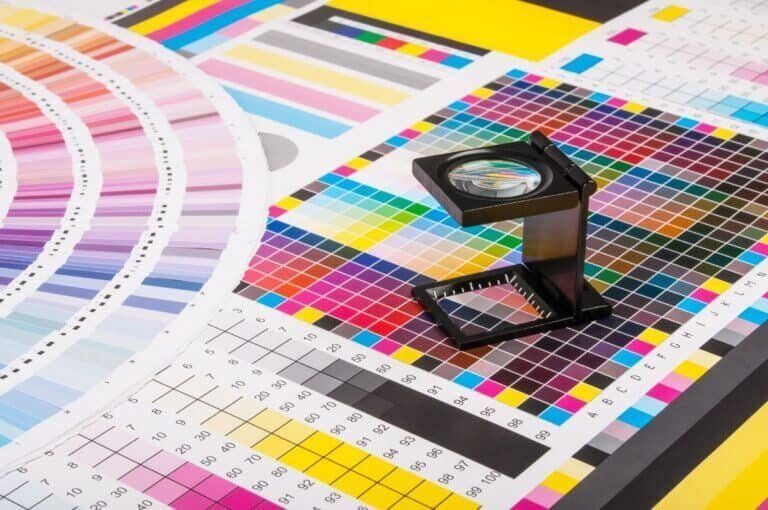
Question 1: What does your color management workflow look like from proof to bulk?
This is the single most revealing question you can ask a book printer in China. Sample approval is the most common false confidence trap in the industry[^1]. Buyers approve a beautiful sample, then receive bulk copies with noticeably different colors — duller, shifted, or inconsistent across copies. This is not always the printer's fault in a moral sense. It is often a workflow failure: no documented link between the approved proof and the press settings used for bulk production.
What a strong response looks like: The printer can describe specific steps. They reference ICC color profiles, calibrated proofing equipment[^2], and a process for communicating approved color targets to the press operator running the actual run. They may mention G7 calibration, spectrophotometer verification[^3], or how they handle spot colors versus CMYK conversion.
What a weak response looks like: "We always match the sample exactly." or "Our operators are very experienced." These are confidence statements, not process descriptions. Experience matters, but it is not a substitute for a documented workflow.
Strong color management capability is a genuine differentiator among Chinese book printers. It is worth asking about in explicit operational terms, not just asking "do you have good color management?"
Question 2: Do you own your production floor, or do you subcontract?
This is a structural risk question, not a trust question. Many trading companies in China present themselves as factories[^4]. They may have a showroom, a sales team, and a very professional website. But the actual printing is done by a third-party facility, sometimes chosen based on current capacity or price rather than your specific requirements.
This matters because:
- File specifications get distorted. When your specs pass through an intermediary, details get lost or simplified.
- Material decisions shift. A subcontractor may substitute a paper grade without informing the trading company, who has no way to detect it.
- Quality accountability blurs. When a defect appears, the trading company and the subcontractor will each point at the other.
None of this means all trading companies are unreliable. But it does mean you need to know which type of supplier you are dealing with. Ask directly: "Is the production done in your own facility? Can you show me photos or video of your press floor?"
At Huaxin Printing, for example, we maintain a fully owned facility covering prepress through finishing — including both offset and digital printing lines. When buyers ask to verify this, we are able to show them directly. That kind of transparency should be a baseline expectation, not a bonus.
Question 3: How do you handle two large orders with overlapping deadlines?
Delivery credibility is testable before you sign a contract. Most sales teams will answer "we always deliver on time." That tells you nothing. The useful version of this question forces the printer to describe a real operational scenario.
What a strong response sounds like: They reference specific capacity planning practices. They describe how they allocate press time, whether they maintain backup machine availability, and under what conditions they would offer a partial shipment or revised timeline. They may mention how they communicate proactively when a schedule risk appears.
What a weak response sounds like: Reassurance without mechanism. "We have never missed a deadline for a client like you." If they cannot describe the process behind that claim, it is a sales statement.
For crowdfunding creators especially, this question is critical. A Kickstarter fulfillment delay is not just a business inconvenience — it is a public trust failure in front of your backers[^5].
Question 4: How are my file specifications communicated to the press operator?
This question often surprises buyers. They assume that once they submit a file and it gets "approved," it will be printed correctly. But in a factory environment, the path from a buyer's email to the hands of a press operator involves multiple steps and multiple people. Each step is an opportunity for information to be lost.
Ask specifically: does your company use a job ticket system? Who is responsible for verifying that the press operator has the correct color targets, paper spec, and binding instructions before the run starts?
Strong printers have a defined internal handoff process. They can describe it in plain language. Weaker operations rely on informal communication — and informal communication under production pressure is where expensive mistakes happen.

What Do the Tier 2 Questions Reveal?
Tier 2 questions confirm that working with this printer is practical and professionally structured. They matter — but a great answer here does not offset a red flag in Tier 1.
Q6 — Paper stock availability: In-house stock reduces lead time and eliminates sourcing risk. Ask specifically which weights and coatings they hold on-site.
Q7 — Certifications: ISO 9001 and FSC are meaningful signals that a quality system exists on paper[^6]. Treat them as documents to verify, not as performance guarantees. Ask what the certification covers and when it was last audited.
Q8 — Payment terms: Standard in the industry is a 30–50% deposit with balance before shipment[^7]. Unusual payment structures (very high upfront, or no deposit at all) are worth investigating.
Q9 — Lead time: Get specific numbers in writing. "4–6 weeks" is a range — confirm whether that includes prepress, production, and shipping, or just press time.
Q10 — Proofs and samples: Physical pre-production samples are non-negotiable for illustrated books, art books, and children's books. Confirm this is included, not an add-on fee.
Q11 — Defect handling: Ask what percentage error rate they consider acceptable, and what their process is if a batch falls outside that range. A printer that does not have a clear answer to this has not thought through their quality guarantee.
Q12 — Market experience: A printer with experience shipping to the US or EU will understand labeling requirements, shipping documentation, and import compliance better than one who primarily serves domestic clients[^8]. At Huaxin Printing, our client base is concentrated in the US, UK, Germany, France, and Australia — which means we have worked through the practical details of cross-border shipping and customs documentation many times over.
Frequently Asked Questions
Is a Chinese book printer always cheaper than a local printer?
Often yes, especially for full-color illustrated books, hardcovers, and large-run orders. The cost advantage comes from lower labor costs and highly developed print infrastructure[^9]. However, you should factor in shipping costs, lead time, and the cost of any quality failures. Price alone is an unreliable decision signal.
How do I verify that a Chinese printer actually owns their factory?
Request a live video call walkthrough of the production floor. Ask to see the presses running current jobs. Ask for photos of equipment with model numbers visible. A genuine factory will accommodate this easily. A trading company may deflect or offer only pre-recorded video.
What file formats should I provide to a book printer in China?
PDF/X-1a or PDF/X-4 are the most widely accepted formats for offset book printing[^10]. Confirm color mode (CMYK for print), resolution (at least 300 DPI for images), and bleed settings (typically 3mm) with your specific printer before submitting files.
How early should I request a physical sample?
Request a physical sample as early as possible in the evaluation process — before you place a bulk order. For color-critical work, the sample approval conversation is also a good test of the printer's color management process, which is one of the Tier 1 evaluation points discussed above.
Can small publishers or crowdfunding creators work with Chinese printers, or is it only for large orders?
Many Chinese printers, including facilities with digital printing lines, accommodate smaller runs. Digital printing is economical for orders under 500 copies; offset becomes more cost-effective above that threshold[^11]. If your project is Kickstarter-funded, confirm minimum order quantities and whether the printer has experience with crowdfunding timelines.
Conclusion
Choosing a reliable book printer in China comes down to one core question: can this supplier maintain consistency between your approved sample and the full bulk run? The 12 questions in this article are tools for testing that — not equally weighted, but organized by what they actually reveal. Start with the Tier 1 questions about color workflow, production ownership, capacity planning, and file communication. Use the Tier 2 questions to confirm the relationship is structurally sound. And treat price as one input among many, not a primary signal.
If you are evaluating suppliers and want to put these questions to work on a real conversation, we are happy to answer all of them directly. Huaxin Printing operates a fully owned facility with in-house color management, offset and digital printing, and direct fulfillment experience for publishing and crowdfunding clients across the US, UK, and EU. Reach out and ask us the hard questions — we think you should.
[^1]: "Toward more efficient and effective color quality control for ...", https://www.researchgate.net/publication/379030895_Toward_more_efficient_and_effective_color_quality_control_for_the_large-scale_offset_printing_process. Research on print quality management identifies color consistency between proofing and production runs as a primary source of customer complaints and reprints in commercial printing, driven by press calibration drift, substrate variation, and operator-dependent settings. Evidence role: general_support; source type: research. Supports: That color variation between proofing and bulk production is a recognized quality control challenge in commercial offset printing. Scope note: Most published studies focus on technical color science rather than quantifying the business cost of sample-to-bulk color failures specifically [^2]: "Introduction to the ICC profile format", https://www.color.org/getting-started/. The International Color Consortium (ICC) defines and maintains the ICC profile specification, which provides a cross-platform standard for characterizing color input and output devices, including printing presses, enabling consistent color reproduction across different equipment and facilities. Evidence role: definition; source type: institution. Supports: That ICC color profiles are an internationally recognized standard for color management in printing and imaging workflows. Scope note: ICC profile adoption does not guarantee color accuracy in practice; implementation quality varies by facility and operator [^3]: "Printing", https://en.wikipedia.org/wiki/Printing. G7 is a calibration methodology developed and administered by IDEAlliance that defines a target gray balance and tonal response curve, enabling different printing devices to produce visually consistent output; facilities that achieve G7 Master certification have demonstrated conformance to these targets under third-party verification. Evidence role: definition; source type: institution. Supports: That G7 is a print calibration methodology administered by IDEAlliance used to achieve visual similarity across different printing devices and facilities. Scope note: G7 certification verifies calibration at a point in time and does not guarantee ongoing consistency without regular recalibration [^4]: "Manufacturing Extension Partnership (MEP)", https://www.nist.gov/mep. Academic and trade literature on Chinese export supply chains documents the prevalence of trading companies that aggregate orders from multiple factories, a structure that can obscure production accountability and complicate quality control for foreign buyers who assume they are dealing with a direct manufacturer. Evidence role: general_support; source type: research. Supports: That trading companies acting as intermediaries in Chinese export manufacturing are common and that buyers frequently cannot distinguish them from direct factories. Scope note: The extent to which trading companies actively misrepresent their status versus simply not volunteering the distinction is difficult to quantify from published sources [^5]: "The role of private delivery time information in reward ...", https://www.sciencedirect.com/science/article/abs/pii/S1366554525001826. Academic research on crowdfunding outcomes documents that a substantial proportion of successfully funded campaigns experience delivery delays, with studies finding that delays correlate with reduced backer satisfaction, lower likelihood of repeat backing, and negative public commentary on campaign pages. Evidence role: statistic; source type: research. Supports: That fulfillment delays are common in crowdfunding campaigns and negatively affect backer trust and creator reputation. Scope note: Published statistics on delay rates vary by study methodology and platform; figures specific to print or publishing campaigns on Kickstarter are not consistently reported in the literature [^6]: "ISO 9001 explained", https://www.iso.org/insights/iso-9001-explained. ISO 9001 specifies requirements for a quality management system that an organization must demonstrate to consistently provide products and services meeting customer and regulatory requirements; the standard certifies process documentation and system structure rather than directly verifying output quality levels, a distinction noted in quality management literature. Evidence role: definition; source type: institution. Supports: That ISO 9001 certifies the existence and documentation of a quality management system rather than guaranteeing specific product quality outcomes. Scope note: ISO itself acknowledges that certification scope and audit rigor vary by certification body, which affects the reliability of the signal [^7]: "Methods of Payment", https://www.trade.gov/methods-payment. Trade finance and international procurement literature describes partial deposit structures as common in Chinese export manufacturing, with deposit percentages typically ranging from 30% to 50% of order value; this structure reflects the supplier's need to cover material costs while providing the buyer some leverage over final payment pending shipment inspection. Evidence role: general_support; source type: institution. Supports: That partial upfront deposits with balance payment before shipment are a common payment structure in Chinese export manufacturing. Scope note: Actual payment terms are negotiated individually and vary by order size, buyer-supplier relationship history, and product category; the cited range should be treated as a general benchmark rather than a fixed standard [^8]: "Importing into the United States A Guide for Commercial ...", https://www.cbp.gov/sites/default/files/documents/Importing%20into%20the%20U.S.pdf. US Customs and Border Protection and European Union customs authorities require commercial importers to provide accurate tariff classification, country-of-origin labeling, and commercial invoices for printed goods; children's books and educational materials may additionally be subject to consumer product safety regulations in both markets, adding compliance considerations beyond standard customs documentation. Evidence role: general_support; source type: government. Supports: That importing printed goods into the US and EU involves customs documentation, tariff classification, and in some cases labeling or safety compliance requirements. Scope note: Specific requirements depend on product type, end use, and applicable trade agreements; this citation provides general context and should not substitute for legal or customs broker advice for specific shipments [^9]: "China - Market Overview", https://www.trade.gov/knowledge-product/exporting-china-market-overview. China ranks among the world's largest exporters of printed products; industry and government trade data indicate that the country's printing sector benefits from lower labor costs relative to Western markets, large-scale capital investment in printing equipment, and supply chain integration with paper and materials manufacturing, factors that collectively support price competitiveness in export markets. Evidence role: general_support; source type: government. Supports: That China is a major global exporter of printed goods and that cost competitiveness is linked to labor costs and manufacturing scale. Scope note: Labor cost differentials between China and Western markets have been narrowing; the degree of cost advantage varies by product type and is not uniform across all printing categories [^10]: "PDF/X", https://en.wikipedia.org/wiki/PDF/X. PDF/X is a family of ISO standards (ISO 15930) defining subsets of the PDF specification intended to ensure that files contain all information necessary for printing and exclude elements that can cause output errors; PDF/X-1a requires all content to be CMYK or spot color with embedded fonts, while PDF/X-4 supports transparency and ICC-based color management, making each appropriate for different production workflows. Evidence role: definition; source type: institution. Supports: That PDF/X-1a and PDF/X-4 are ISO-defined subsets of PDF designed to ensure reliable exchange of print-ready files. Scope note: Acceptance of specific PDF/X versions varies by printer and RIP software; the article's recommendation should be confirmed with the specific facility before file submission [^11]: "A method of minimising paper requirements for offset printing", https://bioresources.cnr.ncsu.edu/resources/a-method-of-minimising-paper-requirements-for-offset-printing/. Print economics literature and industry analyses consistently identify a quantity threshold above which offset printing's lower per-unit cost offsets its higher setup and plate costs relative to digital printing; while the precise crossover varies by product format, paper stock, color coverage, and regional labor costs, figures in the range of 300–1,000 copies are commonly cited for standard book formats. Evidence role: general_support; source type: research. Supports: That offset printing becomes more cost-effective than digital printing above a certain quantity threshold, commonly cited in the range of several hundred copies for book-format products. Scope note: The 500-copy figure cited in the article is an approximation; actual break-even quantities depend on specific job parameters and should be calculated with individual printer quotes


