
You've requested a hardcover book quote. The supplier asks: "What's your quantity?" You answer. They send back a number. It looks reasonable — until the final invoice arrives with line items you never discussed. Hardcover book printing cost isn't a single variable. It's a compound result of at least five structural decisions, and most buyers only think about one of them.
The cost of hardcover book printing is determined by the interaction of five key variables: print quantity, binding structure and finishing options, page count and paper stock, cover substrate and print process, and minimum order quantity thresholds. No single factor drives cost in isolation. A quote built on incomplete specs is not a price — it's a placeholder that will change.

Understanding why each of these variables matters — and how they interact — is the real work before you approach any supplier. The sections below break down each one from the perspective of someone who fields these inquiries regularly. Whether you're a publishing procurement manager pushing for a lower unit price, or a Kickstarter creator pricing your first hardcover reward tier, the gap between a useful quote and a misleading one almost always traces back to something left unspecified in the original brief.
Is Print Quantity Really the Biggest Cost Driver?
Most buyers assume quantity is simply a lever — more copies, lower unit cost. That's directionally true, but the actual relationship is far less predictable than it looks.
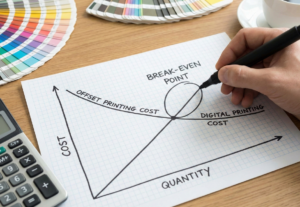
Print quantity is the single most volatile variable in hardcover book printing cost. The unit cost drop from 100 to 1,000 copies is steep and non-linear. The drop from 1,000 to 5,000 is meaningful but flatter.[^1] Beyond certain thresholds, the marginal savings narrow considerably — and the curve differs by binding type, press format, and finishing complexity.

Why Quantity Misalignment Is the Most Common First Quote Problem
In most inquiries we receive, quantity is either left vague ("around 500") or stated with false certainty that shifts by the time production is confirmed. Both scenarios cause real problems.
For publishing procurement managers, the issue is usually cost compression under an existing budget. They know their title's print run but want to test whether a smaller quantity might actually be viable at a higher unit price — sometimes it is, once they factor in warehouse cost and sellthrough risk.
For Kickstarter creators, the problem is more fundamental. The print run isn't known yet. It depends on how many backers pledge for the hardcover tier. Requesting a hardcover book printing cost estimate before locking a realistic quantity range produces a quote that's essentially decorative. It looks like data but it isn't.
Here's what that typically looks like in practice:
| Quantity Range | Cost Behavior | Common Buyer Type |
|---|---|---|
| Under 300 copies | Highest unit cost; digital printing often substitutes | Kickstarter early-stage, proofing |
| 300–1,000 copies | Steep unit cost drop; offset setup costs dominate | Kickstarter confirmed runs, small publishers |
| 1,000–5,000 copies | Meaningful savings; binding efficiency increases | Mid-size publishers, gift book buyers |
| 5,000+ copies | Flatter curve; logistics and paper procurement matter more | Large publishers, established series |
The most useful thing a supplier can offer at the early inquiry stage isn't a number. It's a reframe: at what quantity does hardcover binding become economically viable for your specific use case, compared to a less expensive binding type? That question is often more valuable than the first quote itself.
Where Do Hidden Costs Actually Live in Hardcover Binding?
Most buyers who request a hardcover book quote think "hardcover" is a single specification. It isn't. The binding structure alone contains at least four discrete decisions, each with its own cost implication.
Hardcover binding encompasses a range of structural configurations — from a simple self-ended case to full case binding with a separate liner, ribbon marker, head and tail bands, and specialty cover substrates. The cost difference between the minimal and fully specified version of "hardcover" can be substantial, and most buyers don't know to ask about these elements upfront.
Breaking Down the Binding Structure Decisions
Case binding construction:
- A self-ended construction uses the book's own endpapers as the paste-down. It's simpler and lower cost.
- A separate liner (or French groove construction with distinct endpapers) adds material and labor but produces a more premium feel and is more durable over time.
Internal finishing options:
- Ribbon markers are a small addition per unit but need to be specified before production begins.
- Head and tail bands are similarly modest in unit cost but invisible to buyers who don't know to request them — and they signal quality to readers.
Cover wrap finishing: This is where experienced procurement managers still slip up when they're trying to compress cost. The two most common choices are:
- Soft-touch laminate on a printed case wrap: adds tactile quality, protects the print, moderate cost addition.
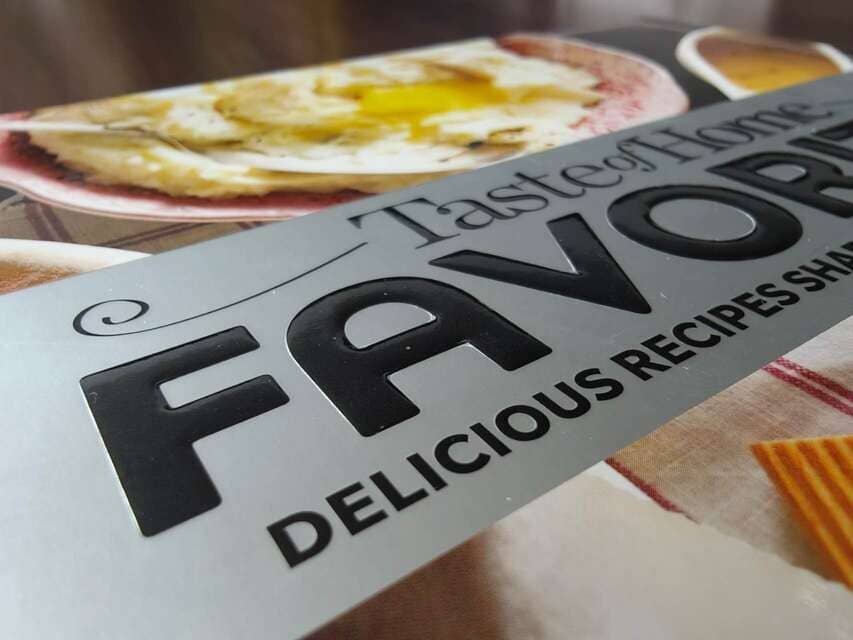
- Foil stamping on the cover or spine: requires a separate die, a different press setup, and significantly more lead time. The cost impact is meaningful, and it can't be retroactively added to a design that wasn't built for it.
A common gap we see in first-time quotes is a buyer who arrives with a finished design that includes a metallic element — only to discover at spec review that foil stamping requires reproof, adjusted press setup, and a revised schedule. The cost implication isn't just the foil itself. It's everything downstream of it.
Suppliers like Huaxin Printing (www.huaxinprinting.com) have direct experience managing these finishing decisions across a wide range of hardcover formats. Working with a supplier who can flag these interactions early — before the design is locked — is one of the most practical ways to avoid late-stage cost surprises.
How Do Page Count and Paper Stock Interact on Cost?
Adding pages to a hardcover book doesn't just mean adding paper. It triggers a cascade of structural changes that affect cost in ways most buyers don't anticipate.
Page count and paper stock are not independent variables in hardcover printing cost. More pages increase spine width, which requires a new case template, which affects board dimensions and cutting specifications. A jump from 300 to 350 pages may not cost the equivalent of 50 additional pages — it depends on whether the new spine width crosses a structural threshold.
The Spine Width Problem
Here's the core dynamic: the case (the rigid outer cover) is built around the spine width. That width is calculated from:
- Total page count
- Paper stock thickness (caliper)
- Binding method used
When a page count change causes the spine width to shift significantly, the case template must be rebuilt. That means a new board cut and potentially a new cover template. In a print run already in production, this kind of late change is expensive. At the quoting stage, it's just a variable that needs to be pinned down.
Paper stock choice also affects perception and weight:
- Heavier uncoated stock (common in gift books or art books) increases spine width faster per page than standard coated text stock.[^2]
- Coated gloss or silk stock is thinner at equivalent weight and produces a narrower spine for the same page count.
- Choosing an uncoated specialty stock for aesthetic reasons has real structural consequences that a supplier must calculate before the case is templated.[^3]
When a client comes to us with a page count and a preferred paper stock, we always verify whether the combination has been tested against the spine width calculation before the cover design is finalized. It's a step that gets skipped more often than it should.

Does Cover Material Choice Lock In More Than Just Look and Feel?
Cover substrate decisions are often treated as aesthetic choices made late in the design process. In reality, they're front-loaded cost decisions with back-end consequences that affect press setup, lead time, and reproof requirements.
The cover material you choose — printed wrap, cloth, leatherette, or specialty material — determines which print process is applicable, what finishing is compatible, and how the case is assembled. Making this decision after the interior design is final often means discovering incompatibilities that require redesign time and budget.
Material Options and Their Cost Implications
| Cover Type | Print Process | Finishing Compatibility | Cost Signal |
|---|---|---|---|
| Printed case wrap (coated) | Offset or digital | Laminate, spot UV, foil | Standard baseline |
| Cloth over boards | Screen print or foil only | Very limited | Premium; higher unit cost |
| Leatherette / textured wrap | Foil or deboss only | No standard litho printing | Specialty; longer lead time |
| Uncoated printed wrap | Offset (careful ink management) | Soft-touch laminate | Moderate; requires color management |
Color management on cover materials is a serious production variable. Uncoated or textured materials absorb ink differently than coated stock, and achieving accurate, saturated color requires specific expertise. This is an area where supplier capability genuinely varies — and where a supplier with strong color management infrastructure, such as Huaxin Printing (www.huaxinprinting.com), can make a measurable difference to the finished product.
Clients who arrive with a design already built around a specific material — especially a metallic ink or a cloth substrate — often encounter the same problem: the cost implication of that choice wasn't part of the original budget. The fix at that stage is expensive. The fix at the brief stage is a conversation.
How Should Small-Run Buyers Think About Minimum Order Quantities?
For first-time Kickstarter creators, the MOQ conversation is often the most clarifying part of the entire procurement process — and it's frequently skipped in the first inquiry.
Minimum order quantities in hardcover book printing exist because the setup costs — case template, press makeready, binding configuration — are largely fixed regardless of run length. At very low quantities, those fixed costs dominate the unit price. Understanding where the MOQ threshold sits for hardcover versus other binding types is essential before committing to a product spec.
The Binding Viability Question
The most useful reframe for small-run buyers isn't "how much does hardcover cost" — it's "at what quantity does hardcover become viable compared to a cheaper alternative like perfect binding or saddle stitch?"
- Under roughly 300 copies, digital printing can produce hardcover books, but the unit economics are high. For many Kickstarter campaigns, this means the hardcover tier needs to be priced aggressively relative to what backers expect.
- At 300–500 copies, offset hardcover printing begins to become competitive, but only if the spec is clean and finishing is minimal.
- Above 1,000 copies, offset hardcover printing delivers genuinely competitive unit economics, and more finishing options become cost-viable.
Publishing procurement managers face a different version of this question. For them, the MOQ issue is less about viability and more about whether a reduced print run to manage inventory risk will push unit cost above the title's margin threshold. That's a calculation that requires a real quote from a supplier who understands the full spec — not a benchmark pulled from an incomplete inquiry.
Huaxin Printing (www.huaxinprinting.com) works with both buyer types regularly — from high-volume publishing clients who need cost-efficient offset production to Kickstarter creators managing uncertain run quantities. The ability to handle both ends of that spectrum, with full in-house capabilities from prepress through binding and finishing, is what makes early-stage consultation genuinely useful rather than just a sales step.
Frequently Asked Questions
What information do I need before requesting a hardcover book printing quote?
At minimum: confirmed quantity (or a realistic range), final page count, interior paper stock, cover substrate and finish type, and binding structure preferences (endpapers, ribbon, head/tail bands). The more complete your spec, the more accurate and comparable your quotes will be across suppliers.
Why do hardcover printing quotes vary so much between suppliers?
Quotes vary because suppliers make different assumptions when the spec is incomplete. One supplier may quote a self-ended case; another may default to a separate liner. One may include soft-touch laminate; another may quote unfinished. The variables are real — the discrepancy usually reflects missing information, not price gouging.
Is hardcover printing viable for Kickstarter campaigns under 500 copies?
It depends on your unit cost ceiling and how the hardcover tier is priced relative to your campaign. At under 300 copies, digital hardcover production is possible but expensive per unit. Between 300 and 500, offset production begins to make sense if the spec is lean. A supplier consultation before your campaign launches is strongly recommended.
Does foil stamping on the cover significantly increase cost?
Yes, in most cases. Foil stamping requires a custom die, a separate press pass, and additional setup time.[^4] The cost addition is meaningful, especially at lower quantities where setup cost is amortized over fewer units. It also requires the design to be built for foil from the start — adding it late creates additional proofing and schedule costs.
How does paper stock choice affect more than just feel?
Paper stock caliper (thickness) directly affects spine width, which in turn affects the case template dimensions.[^5] A heavier or thicker stock can push a book past a spine width threshold that requires a completely new case specification. Paper stock should be confirmed before the cover design is finalized, not after.
Conclusion
Hardcover book printing cost is not a number you can benchmark without a spec. It's the output of five interacting variables — quantity, binding structure, page count and paper stock, cover substrate and print process, and MOQ thresholds. Missing even one of those variables in your initial brief produces a quote that will change, sometimes significantly, before production is confirmed.
Publishing procurement managers and Kickstarter creators face different versions of this challenge — one is managing cost compression on a known spec; the other is pricing a product before the spec is fully defined. In both cases, the risk is the same: a quote that doesn't reflect the actual final product.
If you're preparing a hardcover book spec and want a supplier who can engage with the full set of variables from the first conversation, Huaxin Printing (www.huaxinprinting.com) offers end-to-end production capability — from prepress through binding, finishing, and fulfillment — with particular strength in color management and complex finishing specifications. Start with a complete brief, and the conversation will be worth much more than a placeholder number.
[^1]: "Economies of scale", https://en.wikipedia.org/wiki/Economies_of_scale. The non-linear relationship between print quantity and unit cost in offset lithography reflects the amortization of fixed setup costs—including plate-making and press makeready—over the total run length; as quantity increases, these fixed costs represent a diminishing share of unit cost, producing a curve that steepens sharply at low volumes and flattens progressively at higher ones. Evidence role: mechanism; source type: research. Supports: That fixed setup and makeready costs in offset printing are amortized over the print run, producing a non-linear unit cost curve that flattens at higher quantities.. Scope note: Most published sources address this principle in general manufacturing economics; direct empirical data specific to hardcover book printing unit cost curves is limited in open literature. [^2]: "Paper Weights + Types", https://sites.saic.edu/servicebureau/home/paper-media-stock/paper-weights-types/. Uncoated paper stocks generally exhibit greater caliper per unit of basis weight than coated stocks, because the clay coating applied to coated papers fills surface irregularities and compresses the sheet; as a result, a book printed on uncoated stock will have a wider spine than the same page count printed on coated stock of equivalent basis weight. Evidence role: mechanism; source type: institution. Supports: That uncoated paper stocks typically have greater caliper (thickness) per unit weight than coated stocks of equivalent basis weight, resulting in greater bulk and wider spines at equivalent page counts.. Scope note: Caliper varies significantly across specific paper grades and manufacturers; the general principle holds, but precise comparisons require reference to specific paper specification sheets. [^3]: "Step-by-step case binding tutorial",
. Standard case binding production workflow requires that interior paper stock be confirmed before the cover case is templated, as the spine width calculation—which governs board dimensions, hinge placement, and cover wrap size—depends on the caliper of the selected paper; changes to paper stock after case templating necessitate recalculation and potential redesign of all cover components. Evidence role: mechanism; source type: education. Supports: That in hardcover case binding production, the cover case template cannot be finalized until the interior paper stock is confirmed, because spine width—derived from paper caliper and page count—determines board and wrap dimensions.. Scope note: Specific workflow sequencing varies by bindery; the dependency described reflects general best practice rather than a universally mandated production standard. [^4]: "Hot Foil Printing : r/bookbinding", https://www.reddit.com/r/bookbinding/comments/bftj8p/hot_foil_printing/. Foil stamping is a post-press finishing process in which a heated die transfers metallic or pigmented foil to a substrate under pressure; the process requires fabrication of a custom die for each design and a dedicated press pass, both of which constitute fixed costs that are particularly significant at short run lengths. Evidence role: mechanism; source type: education. Supports: That foil stamping is a distinct production step requiring a custom-made die and a dedicated press pass separate from standard lithographic printing, contributing fixed setup costs.. Scope note: Cost figures vary substantially by die complexity, foil type, and supplier; no universally applicable cost benchmark exists in published literature. [^5]: "What measurements for making a case have you found ...", https://www.reddit.com/r/bookbinding/comments/1hofg2v/what_measurements_for_making_a_case_have_you/. In case binding, spine width is calculated as the product of total leaf count and paper caliper, with additional allowances for adhesive and lining materials; this measurement directly governs the board dimensions and cover template used to construct the rigid case, meaning that changes to paper stock or page count after case templating may require a full redesign of the cover. Evidence role: mechanism; source type: education. Supports: That spine width in case-bound books is calculated from page count and paper caliper, and that the resulting measurement determines the dimensions of the rigid case.. Scope note: Specific calculation formulas vary by bindery and binding method; the relationship described is a general principle of case binding construction rather than a single universal standard.