
Spot UV Printing for Book Covers
A touch of gloss can change how a cover is seen. Learn where to use spot UV, how to prepare your artwork, and what to consider before printing.
What is spot UV? Spot UV is a clear coating applied to selected areas of a printed surface and cured with ultraviolet light. It is often used to make a book title, image or pattern shine against a matte background.
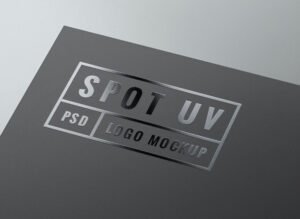
Gloss exactly where you want it
Spot UV--also called spot gloss UV or spot UV varnish--is a finishing process used after the cover artwork is printed. A clear UV-curable coating is applied only to selected areas, then cured under ultraviolet light.
As the book moves, the coated areas catch the light. The effect is often most noticeable when gloss spot UV is paired with a compatible matte-laminated background. The finish does not replace the ink or artwork beneath it.
The final appearance depends on the coating, cover material, artwork and lighting. Ask for a physical sample when evaluating the effect.
Direct attention
Emphasize a title, logo or a specific detail in an illustration.
Create contrast
Combine a reflective detail with a low-sheen cover for a more noticeable effect.
Add a tactile option
Raised spot UV can add texture; its availability and thickness depend on the process.
Where to use spot UV on a book cover
Choose the part of your cover you want readers to notice first. A small, deliberate area of gloss can create a striking contrast with the surrounding surface.
Titles & lettering
Apply gloss to a book title or author name to bring the typography forward when the cover catches the light.
Design tip: Bold lettering usually makes the effect easier to see than very fine type.

Images & illustrations
Bring attention to a selected part of an illustration or photograph, such as a flower, character or product detail.
Design tip: Leave surrounding areas matte so the selected detail has room to shine.

Patterns & logos
Create a repeating pattern, highlight a publisher's logo or add a clear motif that appears as the book moves.
Design tip: Ask your printer to check small details and registration before finalizing the mask.
Spot UV vs. other cover finishes
These finishes serve different purposes and may be combined when the materials and production method are compatible.
| Finish | How it works | Typical use |
|---|---|---|
| Gloss spot UV | Clear UV-cured coating on selected areas | Glossy titles, logos and details against a contrasting background |
| Raised spot UV | Thicker coating on selected areas | A more tactile effect; availability and thickness vary |
| Flood UV coating | UV coating across the surface | An overall finish instead of selective contrast |
| Lamination | A film bonded to printed paper or board | Changes the overall cover look and helps protect its surface |
| Foil stamping | Foil transferred to selected areas | Metallic or other foil effects; distinct from clear gloss |
Discuss the production sequence and test compatibility when combining finishes.
Have a cover concept in mind?
Share your artwork and we can discuss a suitable approach.
How to prepare spot UV artwork
Your printer needs to know both what to print and exactly where to apply the clear coating. Confirm the final file specifications before submitting artwork.
Prepare the cover
Supply the print-ready cover artwork, including the printed elements that will appear beneath the coating.
Mark coated areas
Create a separate mask or layer containing only the areas to receive spot UV, following the printer's file and color instructions.
Match the artwork
Keep the mask aligned with the cover file and match its size and orientation. Account for normal registration variation.
Confirm a proof
Ask for prepress review and discuss a physical proof or representative sample before production.

Before you send your files
- Ask for current requirements for file format, mask color, minimum line widths, bleed and registration tolerances.
- Avoid relying on extremely fine lines or small type for a prominent gloss effect.
- Discuss folds, spine hinges, trimming and areas used for gluing with the production team.
- Identify any foil, embossing or lamination that will be combined with the coating.
What affects spot UV cost?
Cost depends on book size and quantity, cover material, the size and complexity of the UV area, setup, finishing method and other finishes. A complete specification and artwork help the printer assess the work.
Raised spot UV and combinations with foil, embossing or lamination may require different equipment or extra production steps. Availability and lead time should be confirmed for the project.
Include these details in your inquiry
- Book type, finished size, page count and quantity
- Cover paper or board and desired lamination
- Areas to receive spot UV and whether a raised effect is desired
- Artwork or mask status, other finishes and proof requirements
- Packing, destination and delivery schedule
Spot UV printing FAQs
What is the difference between spot UV and lamination?
Spot UV is a coating cured on selected areas. Lamination is a film bonded to the sheet. They can sometimes be combined, subject to material and process compatibility.
Can spot UV be applied over matte lamination?
Often, yes. Gloss spot UV over a compatible matte film can create contrast. Confirm adhesion and the production sequence, and review a sample.
Is spot UV raised?
Standard spot UV is often primarily a visual gloss effect. Raised or 3D spot UV can create more noticeable texture, depending on the equipment and process.
Does spot UV require a separate artwork file?
A separate mask or layer generally identifies the coated areas. Confirm the exact file and color setup with your printer.
Can spot UV be combined with foil or embossing?
It may be possible, but placement, adhesion and production order depend on the materials and processes. Share the complete artwork and discuss a sample.
Is spot UV waterproof or scratch-proof?
Spot UV does not make the complete book waterproof or scratch-proof. Performance depends on the materials and finished product construction.
Ready to finish your cover?
Tell Huaxin about your book and the details you want to highlight.