

China vs USA book printing can look like a simple price comparison, but that shortcut often creates sourcing mistakes. Buyers see a low unit price, then later face freight, proofing, customs, storage, or schedule pressure. A better approach is to compare the full production plan, not only the printer’s quote.
China vs USA book printing should be evaluated by total landed cost, minimum order quantity, quality-control needs, and timeline. US printing may fit small, urgent, or frequently revised projects. China printing may fit larger planned runs with stable files, defined specifications, and enough time for proofing, production, and international shipping.
I handle overseas book printing inquiries every week, and I rarely quote responsibly from only a title and quantity. I usually need page count, size, binding, paper, files, delivery address, deadline, and proofing needs. Those details decide whether China or the USA is more practical.
How Should I Compare China vs USA Book Printing Costs?
Cost looks simple when a supplier sends a unit price. The problem starts when that price excludes shipping, proofing, customs, domestic delivery, or fulfillment handling. If buyers compare only print cost, they may choose the wrong supplier and discover the real cost too late.
China vs USA book printing cost should be compared as total landed cost, not print unit price. Total landed cost includes printing, prepress work, proofs, revisions, freight, duties or taxes, customs clearance, warehouse handling, local delivery, and possible fulfillment-related expenses.
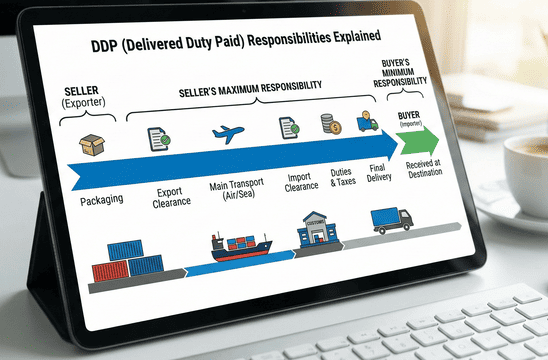
Why the unit price is not enough
In many overseas quotation requests, buyers ask me, “What is the price for 1,000 books?” That is a natural question, but it is incomplete. A 1,000-copy hardcover art book and a 1,000-copy paperback novel can have completely different cost structures. Even two books with the same page count can vary because of paper weight, color coverage, binding, coating, inserts, or packaging.
For China vs USA book printing, the biggest misunderstanding is this:
> A lower factory unit price does not always mean a lower delivered cost.
A China-based printer may have strong unit-cost advantages at suitable volumes, especially for offset printing, complex binding, paperboard components, or multi-part projects. However, very small runs can lose that advantage after international freight and setup costs. A US printer may be more practical for a short digital run, a local event deadline, or a project that needs repeated file changes.
What belongs in total landed cost?
I advise buyers to build a simple cost sheet before deciding. The sheet should include every step from file preparation to final delivery.
| Cost Item | Why It Matters | China Printing Consideration | USA Printing Consideration |
|---|---|---|---|
| Printing cost | Base manufacturing cost | Often competitive at suitable volume | Often practical for short runs |
| Proofing | Confirms color, paper, and binding | Physical proofs need courier time | Local proofs may be faster |
| File revisions | Prepress time and schedule risk | Time zone communication matters | Easier real-time discussion |
| Freight | Major cost for heavy books | Sea freight lowers cost but takes longer | Domestic freight is simpler |
| Duties/taxes | Import-related cost | Must be checked by buyer or broker | Usually not an import issue |
| Local delivery | Port-to-warehouse or final mile | Needs planning after customs | Often easier to estimate |
| Storage | Important for large runs | May need warehouse planning | May use local storage options |
| Fulfillment | Kickstarter or ecommerce handling | Needs separate planning | May integrate with local partners |
A practical cost framework
I use three questions when helping a buyer compare options:
-
How many copies are needed now? If the project needs 50–200 copies, digital printing in the USA may be more efficient. If the project needs 1,000, 3,000, or more copies, China printing may become more competitive, depending on specifications.
-
How heavy is the finished shipment? Books are dense. A hardcover book, a coffee table book, or a full-color workbook can create significant freight cost. The heavier the shipment, the more important shipping mode and destination become.
-
Where will the books be used or sold? If all books must go to a US warehouse, the landed cost should include delivery to that location. If part of the order ships to the UK, EU, or Australia, the logistics plan changes.
Example scenario, not a universal price rule
Suppose a buyer has a 64-page black-and-white paperback and needs 100 copies for a local signing event next week. In that case, US domestic printing may be the better decision because international shipping and proofing time would not make sense.
Now suppose a small publisher has a 2,000-copy full-color hardcover book with stable files and a delivery deadline three months away. In that case, China vs USA book printing becomes a serious sourcing comparison. The buyer should request quotes with the same paper, binding, finish, packaging, and delivery terms.
The key is not to ask, “Which country is cheaper?” The better question is:
> Which production route gives me the best delivered result at the lowest total risk?
How Does MOQ Affect China vs USA Book Printing?
MOQ can feel like a supplier’s arbitrary rule. Buyers may think one printer is flexible and another is difficult. In reality, MOQ usually comes from production method, setup cost, paper purchasing, binding workflow, and the economics of running equipment efficiently.
China vs USA book printing MOQ depends on quantity, page count, trim size, binding, paper choice, and whether the job uses digital or offset printing. Small urgent orders often fit digital production. Larger standardized runs often fit offset printing because setup costs are spread across more copies.
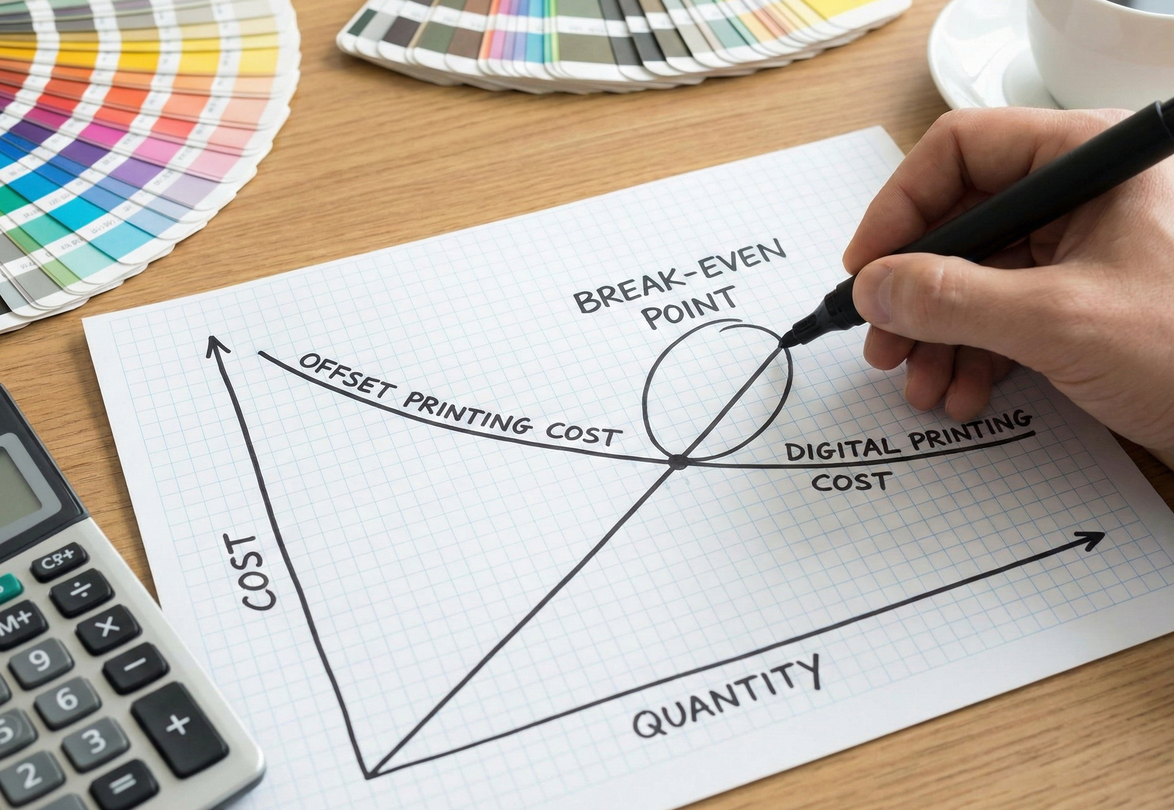
MOQ is linked to production method
MOQ is not only a sales policy. It is also a manufacturing question. In our factory, I look at whether the project fits digital printing, sheet-fed offset printing, web printing, or a mixed process. Each method has a different setup cost and efficiency point.
For book printing, these variables strongly affect MOQ:
- Quantity
- Page count
- Trim size
- Color or black-and-white printing
- Paper type and paper weight
- Binding method
- Cover finishing
- Packaging needs
- Proofing requirements
- Delivery deadline
Digital printing vs offset printing
Digital printing usually works better for low quantities and fast revisions. Offset printing usually becomes more economical when the quantity is high enough to absorb plate-making, machine setup, color adjustment, and waste sheets.
| Factor | Digital Book Printing | Offset Book Printing |
|---|---|---|
| Best for | Short runs, urgent copies, testing | Larger runs, stable files, lower unit cost at volume |
| Setup cost | Lower | Higher |
| Unit cost at volume | Usually higher | Usually lower |
| Color consistency across large runs | Good, but device-dependent | Strong when controlled well |
| Revision flexibility | Better | Lower after plates and production start |
| Common use | ARCs, samples, small reprints | Trade books, children’s books, art books, textbooks |
Why China may need higher practical quantities
A China-based book printing supplier may be very competitive for offset production, but very small quantities can be inefficient after setup and international logistics. For example, 100 copies of a basic paperback may not be a good fit if the buyer needs them in the US quickly. Even if the production price looks attractive, freight and courier costs can change the result.
However, China can be highly practical when the book has:
- A larger planned print run
- Full-color pages
- Hardcover or board book binding
- Special paper or finishes
- Box sets or slipcases
- Matching notebooks, cards, maps, or printed accessories
- Kickstarter rewards that require combined sourcing
This is where my factory’s full-process production capability matters. We can control prepress, printing, binding, finishing, and packaging under one production plan. For board games or book-plus-accessory projects, we can also help source related paper components or game parts. That does not mean every project should print in China. It means larger and more complex projects often deserve a serious comparison.
How buyers should state quantity
When a buyer asks for a quote, I recommend giving at least three quantities. This helps the printer show the cost curve.
For example:
- 500 copies
- 1,000 copies
- 2,000 copies
This is more useful than asking for one number. It shows where the unit cost changes. It also helps the buyer decide whether printing more copies reduces the cost enough to justify storage and cash flow.
MOQ decision checklist
Before choosing China vs USA book printing, ask yourself:
- Do I need a small batch first?
- Will the content change soon?
- Is this a launch print run or a test run?
- Can I store extra inventory?
- Do I need offset-level color control?
- Is my deadline flexible enough for overseas production?
- Does my book have special materials or finishing?
A low MOQ is useful only when it fits the business plan. A larger MOQ is reasonable only when the project has enough demand, enough schedule space, and clear specifications.
Is Quality Better in China vs USA Book Printing?
Quality problems are frustrating because they are often discovered after money and time have already been spent. Buyers may blame the country of production. However, that explanation is too simple and not very useful for making a better sourcing decision.
Quality in China vs USA book printing depends less on country and more on print-ready files, color management, proofing, paper selection, binding method, prepress communication, batch consistency, and inspection standards. A capable supplier in either country should explain these controls clearly before production.

Quality starts before the press runs
From my experience, many book quality issues begin before production. A file may look perfect on screen but fail in print because of low-resolution images, wrong color mode, missing bleed, thin lines, font issues, or unrealistic color expectations.
When I review a book project, I usually check or ask about:
- Final trim size
- Bleed and safe margin
- Image resolution
- CMYK or spot color setup
- Total ink coverage
- Font embedding
- Page order
- Spine width
- Cover finish
- Paper grain direction
- Binding strength requirements
A strong printer should not simply accept files and print blindly. A good prepress process protects both sides.
Color management matters
Our factory places strong emphasis on color management because many of our customers print children’s books, art books, game books, calendars, and brand-heavy projects. These products depend on vivid and accurate color. Still, I always explain that color approval should be based on a controlled proofing process, not only a monitor view.
Common proofing options include:
| Proof Type | Purpose | Limitation |
|---|---|---|
| Digital PDF proof | Checks layout, text, page order | Does not confirm final print color |
| Digital hard proof | Gives a physical color reference | May not match offset production perfectly |
| Press proof | Closer to final production conditions | Costs more and needs more time |
| Advance production sample | Confirms binding and finishing | May still need batch consistency checks |
For China vs USA book printing, buyers should decide how much proofing risk they can accept. A black-and-white novel may not need the same proofing process as a full-color art book. A children’s book with skin tones, brand colors, or rich illustrations needs more careful color discussion.
Paper choice changes the result
Paper is not just a cost item. It changes color, opacity, thickness, weight, and perceived value. Coated paper can make images look sharper and more saturated. Uncoated paper can feel natural and readable, but it may absorb more ink and reduce color brightness.
Important paper factors include:
- Weight: Commonly measured in gsm or lb text/cover.
- Opacity: Important for text-heavy books and workbooks.
- Bulk: Affects spine width and hand feel.
- Surface: Coated, matte, gloss, or uncoated.
- Whiteness: Changes the appearance of printed color.
- Certification documents: If FSC or other paper documentation is required, buyers should request and verify relevant documents before production.
I avoid saying one country has “better paper.” The more practical question is whether the supplier can source the correct paper, explain available substitutions, and maintain consistency during the production run.
Binding quality must match the book’s use
Binding is another area where buyers should avoid oversimplified comparisons. A cookbook, children’s board book, workbook, novel, and premium art book have different durability needs.
Common binding choices include:
- Perfect binding: Common for paperbacks.
- Sewn binding: Stronger and better for books that open frequently.
- Case binding: Used for hardcovers.
- Wire-O binding: Useful for manuals, notebooks, and calendars.
- Saddle stitch: Practical for thin booklets.
- Board book binding: Used for children’s books with thick pages.
For example, a 240-page art book on heavy coated paper may need stronger binding than a light novel on offset paper. If the buyer only asks for the cheapest binding, the book may not perform well in real use.
Batch consistency and inspection
For larger runs, buyers should ask how the printer controls batch consistency. Useful inspection points include:
- Prepress file check
- Paper confirmation
- Color proof approval
- First-sheet inspection
- In-process sampling
- Binding strength check
- Final packing inspection
- Carton labeling and pallet plan
In our own production communication, I prefer to confirm these points before mass production. It reduces disputes and helps the buyer understand what is being controlled.
Quality is not a national label. Quality is a system. The best supplier is the one that can explain the system in a way you can verify.
What Lead Time Should I Expect for China vs USA Book Printing?
Lead time becomes stressful when buyers start planning after the files are finished. In reality, the schedule begins much earlier. Proofing, production queue, binding, shipping, customs, and domestic delivery all need time, and one delayed approval can affect the full project.
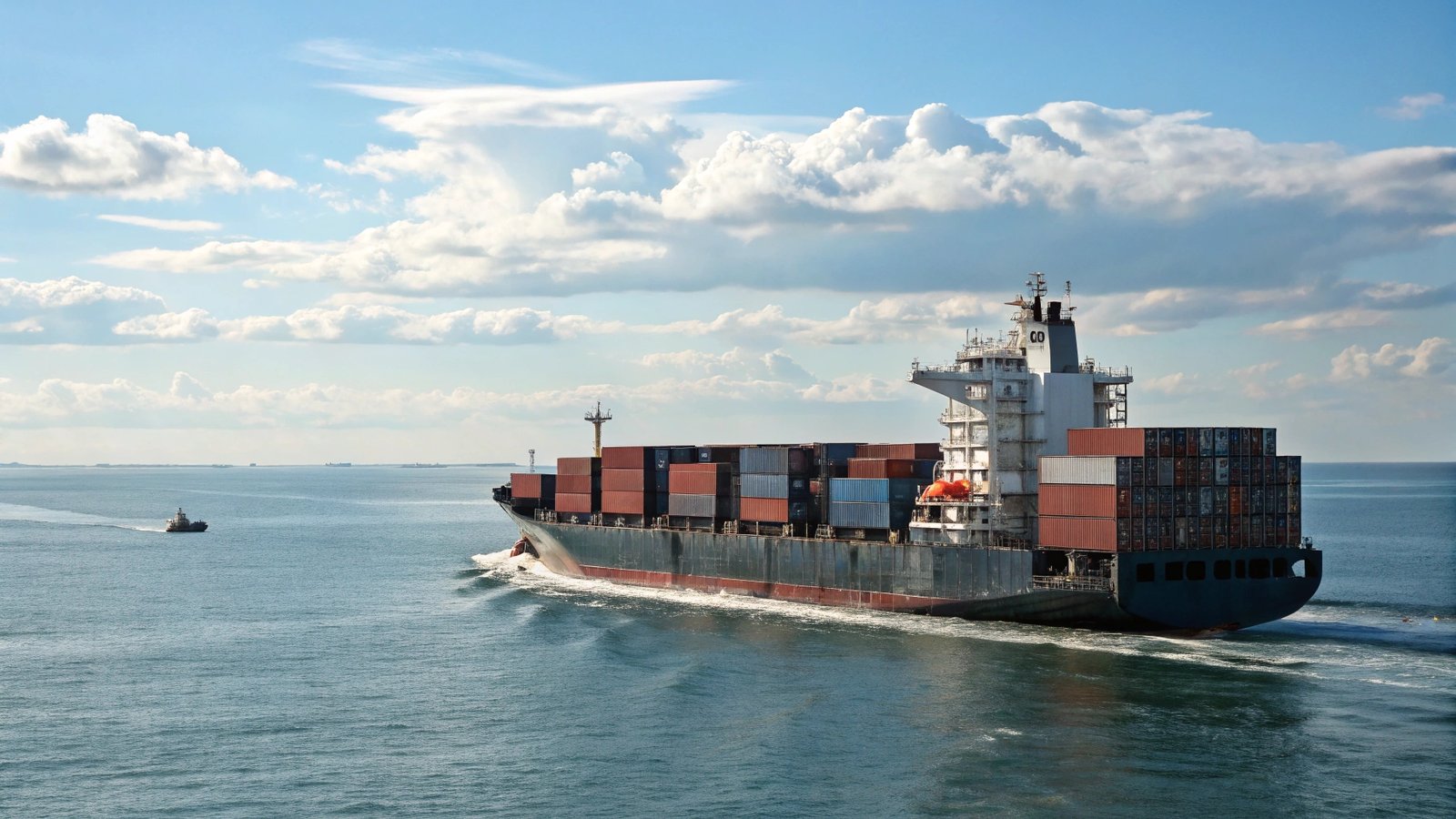
Lead time for China vs USA book printing should be planned backward from the delivery date. Buyers should include file preparation, proof approval, production scheduling, printing, binding, finishing, sea or air freight, customs clearance, and final domestic delivery before choosing a supplier.
Start with the final delivery date
I often ask buyers, “When do you need books in hand?” This is more useful than asking, “When do you want production finished?” A production completion date does not mean the books are available for launch, fulfillment, or retail delivery.
For a US buyer, the real schedule may include:
- File finalization
- Prepress review
- PDF proof approval
- Physical proof production
- Courier proof delivery
- Proof review and comments
- Mass production queue
- Printing
- Binding and finishing
- Packing
- Export booking
- Ocean or air freight
- Customs clearance
- Port handling
- Domestic trucking
- Warehouse receiving
- Fulfillment preparation
Each step may be manageable, but together they create a real project timeline.
Sea freight vs air freight
Shipping mode can change the decision. Sea freight is usually more economical for heavy books, but it takes longer. Air freight is faster, but it can be expensive for dense paper products. Courier shipping may work for samples or very small shipments, but it usually does not fit large book orders.
| Shipping Mode | Best For | Main Advantage | Main Risk |
|---|---|---|---|
| Courier | Samples, proofs, urgent small cartons | Fast and simple | High cost per kg |
| Air freight | Urgent medium shipments | Faster than sea | Expensive for heavy books |
| Sea freight | Larger planned runs | Lower freight cost per unit | Longer timeline and port variables |
| Domestic US freight | US-printed books | Simpler local movement | Still needs scheduling |
When US printing may be better for lead time
US printing may be the better choice when:
- The launch date is very close.
- The book files are still changing.
- The quantity is small.
- The buyer needs local press checks.
- The project requires repeated approval cycles.
- The buyer cannot manage import logistics.
- The books must arrive before a fixed event.
I do not see this as a weakness of China printing. I see it as matching the production route to the project. A rushed overseas order is risky. If the schedule is too tight, a local solution may reduce stress and avoid expensive air freight.
When China printing can fit the timeline well
China printing can work very well when the buyer plans early. This is especially true for:
- Seasonal publishing schedules
- Kickstarter campaigns
- Children’s books
- Hardcover books
- Board books
- Box sets
- Calendars
- Full-color illustrated books
- Books with matching printed components
Kickstarter creators need special care. A campaign may raise funds successfully, but fulfillment can become difficult if samples, freight, customs, and backer delivery are not planned. I usually recommend building extra buffer time into the schedule, especially for first-time creators.
A backward-planning example
Here is a simplified planning model. The exact timeline must be verified with the supplier, freight forwarder, and customs broker.
| Step | Planning Question |
|---|---|
| Final delivery | When must books arrive at warehouse or event? |
| Domestic delivery | How long from port or printer to final address? |
| Customs | Who handles clearance and import documents? |
| International freight | Is sea, air, or courier shipping required? |
| Packing completion | When must cartons be ready? |
| Binding and finishing | Does the book need special finishing or drying time? |
| Printing | Is the project in the production queue? |
| Proof approval | Has the buyer approved color, paper, and binding? |
| File check | Are final files truly print-ready? |
The safest method is to plan backward, then add buffer. Printing is manufacturing, and manufacturing works best when decisions are made before the schedule becomes urgent.
Which Projects Fit China vs USA Book Printing Best?
A sourcing decision becomes clearer when buyers match the printer to the project type. The wrong match creates avoidable cost, quality, and timing problems. The right match helps the buyer control risk before production starts.
China vs USA book printing works best when buyers classify the project first. Small urgent reprints may favor US printing. Larger planned runs with stable files may favor China. Kickstarter and publishing projects need extra planning for proofs, freight, fulfillment, and delivery dates.
Project type matters more than country
I usually group book projects into practical categories. This helps buyers avoid emotional or overly simple decisions.
| Project Type | Often Better Fit | Reason |
|---|---|---|
| 50–200 copy urgent reprint | USA | Fast local turnaround and lower logistics burden |
| ARC copies or review copies | USA or local digital | Small quantity and quick revisions |
| 1,000+ paperback with stable files | China or USA comparison | Total landed cost should decide |
| Full-color hardcover book | China or specialized supplier | Material, binding, and color control matter |
| Children’s board book | China or experienced board book printer | Complex binding and safety documentation needs |
| Kickstarter book campaign | China or hybrid plan | Cost control, samples, shipping, and fulfillment planning |
| Book plus cards, box, or accessories | China can be strong | One-stop sourcing may reduce coordination |
| Last-minute event books | USA | Schedule risk is lower |
This table is not a universal rule. It is a starting point for evaluation.
Questions I ask before quoting
A professional supplier should ask detailed questions before offering a final quote. If a printer gives a fast price without specifications, the number may not be reliable.
When I receive an overseas inquiry, I usually ask for:
- Book type: Paperback, hardcover, board book, notebook, calendar, workbook, or game book.
- Quantity: One quantity or several quantity options.
- Trim size: Final width and height.
- Page count: Interior pages and cover structure.
- Color: Black-and-white, full color, spot color, or mixed.
- Paper: Coated, uncoated, gsm, or sample reference.
- Binding: Perfect bound, sewn, case bound, Wire-O, saddle stitch, or other.
- Cover finish: Lamination, foil stamping, embossing, spot UV, dust jacket, or slipcase.
- Files: Final print-ready files or working files.
- Proofing needs: PDF proof, hard proof, press proof, or sample copy.
- Delivery location: Full address or at least city, state, and country.
- Deadline: Date books must arrive, not only ship.
- Shipping method: Sea, air, courier, or buyer’s forwarder.
These questions are not obstacles. They are risk-control tools.
For independent authors
Independent authors often need to balance budget, speed, and inventory risk. If this is your first book, it may be wise to print a small local batch first, test demand, and then consider a larger overseas run. This approach can reduce storage pressure and help you catch file or design issues early.
If the book has premium color, hardcover binding, or special packaging, China vs USA book printing becomes more relevant. You should request comparable quotes with the same specifications and delivery terms.
For small publishers
Small publishers often understand that unit cost affects margin. However, margin should not be separated from schedule and inventory. A lower unit cost is useful only if the books arrive on time, meet quality expectations, and do not create excessive storage burden.
For publishers, I suggest building a standard RFQ template. It should include the full technical specification and delivery requirements. This makes supplier comparison much easier.
For Kickstarter creators
Kickstarter projects need extra discipline. Backers may expect updates, samples, stretch goals, and delivery dates. If the campaign adds new components, such as cards, maps, bookmarks, stickers, or boxes, the production plan changes.
Because our factory also handles paper product printing and can help with tabletop game component sourcing, I often see how quickly a “book project” becomes a “multi-component product.” In those cases, one-stop coordination can reduce communication gaps. Still, the buyer should confirm specifications, samples, and fulfillment plans before making promises to backers.
The best sourcing decision
The best supplier choice is not based on a country label. It is based on fit.
Choose the USA more often when:
- The run is small.
- The deadline is urgent.
- Files may change often.
- You need local communication.
- You want to avoid import logistics.
Consider China more seriously when:
- The run is large enough.
- The files are stable.
- The book has complex production needs.
- You can plan proofing and shipping.
- Total landed cost is favorable.
- You need coordinated printing, finishing, packaging, or accessories.
A good China vs USA book printing decision should reduce risk, not only reduce unit price.
Frequently Asked Questions
Is book printing in China always cheaper than in the USA?
No. China may offer unit-cost advantages at suitable volumes, especially for offset printing or complex projects. However, small runs can become less competitive after proofing, international freight, customs, and local delivery. Buyers should compare total landed cost, not only factory price.
What is the best MOQ for printing books in China?
There is no universal MOQ. The practical quantity depends on page count, size, paper, binding, color, and production method. Offset printing usually needs more copies to become cost-effective. Buyers should request several quantity options, such as 500, 1,000, and 2,000 copies.
Can China printers match US printing quality?
A capable China printer can produce strong quality, but quality depends on files, color management, paper, proofing, binding, and inspection. Buyers should not judge by country alone. They should review samples, confirm specifications, approve proofs, and verify quality-control steps before mass production.
When should I choose US book printing instead of China printing?
US printing may be better for small quantities, urgent deadlines, frequent revisions, local events, or projects that need close real-time communication. It can also reduce logistics complexity because buyers do not need to manage international freight, customs clearance, or import-related planning.
What information should I provide for an accurate book printing quote?
You should provide quantity, trim size, page count, color, paper, binding, cover finish, file status, proofing needs, delivery location, deadline, and shipping preference. If you are unsure about paper or binding, ask the printer to recommend options based on your book’s use.
Conclusion
China vs USA book printing is not a simple “cheaper country” decision. It is a sourcing decision based on total landed cost, MOQ, quality-control needs, and lead time. US printing can be the right choice for small, urgent, or changing projects. China printing can be a strong option for larger planned runs, color-critical books, hardcovers, calendars, and multi-component publishing projects. If you are comparing suppliers, send me your specifications, delivery location, and deadline. I can help you review the practical production route before you commit.